Will the requirement that 30% of municipal government purchases of new energy vehicles in the most recent Chinese government’s policy result in a mismanagement of resources? It will if automakers adopt BYD’s http://www.byd.com strategy. The Chinese electric vehicle manufacturer is building plants all over China to gain customers.
While the strategy may grow BYD’s sales both locally and globally, it could result in a massive waste of what is apparently dwindling capital. And as BYD’s missteps here in California prove, it may also sap a lot of BYD’s human capital as it works to resolve problems.
I started thinking about this as I read a story in Automotive News China regarding BYD’s plan to assemble buses in the central China city of Wuhan in order to convince the Wuhan government to buy BYD’s K9 electric bus for its local fleets. http://www.autonewschina.com/en/index.asp
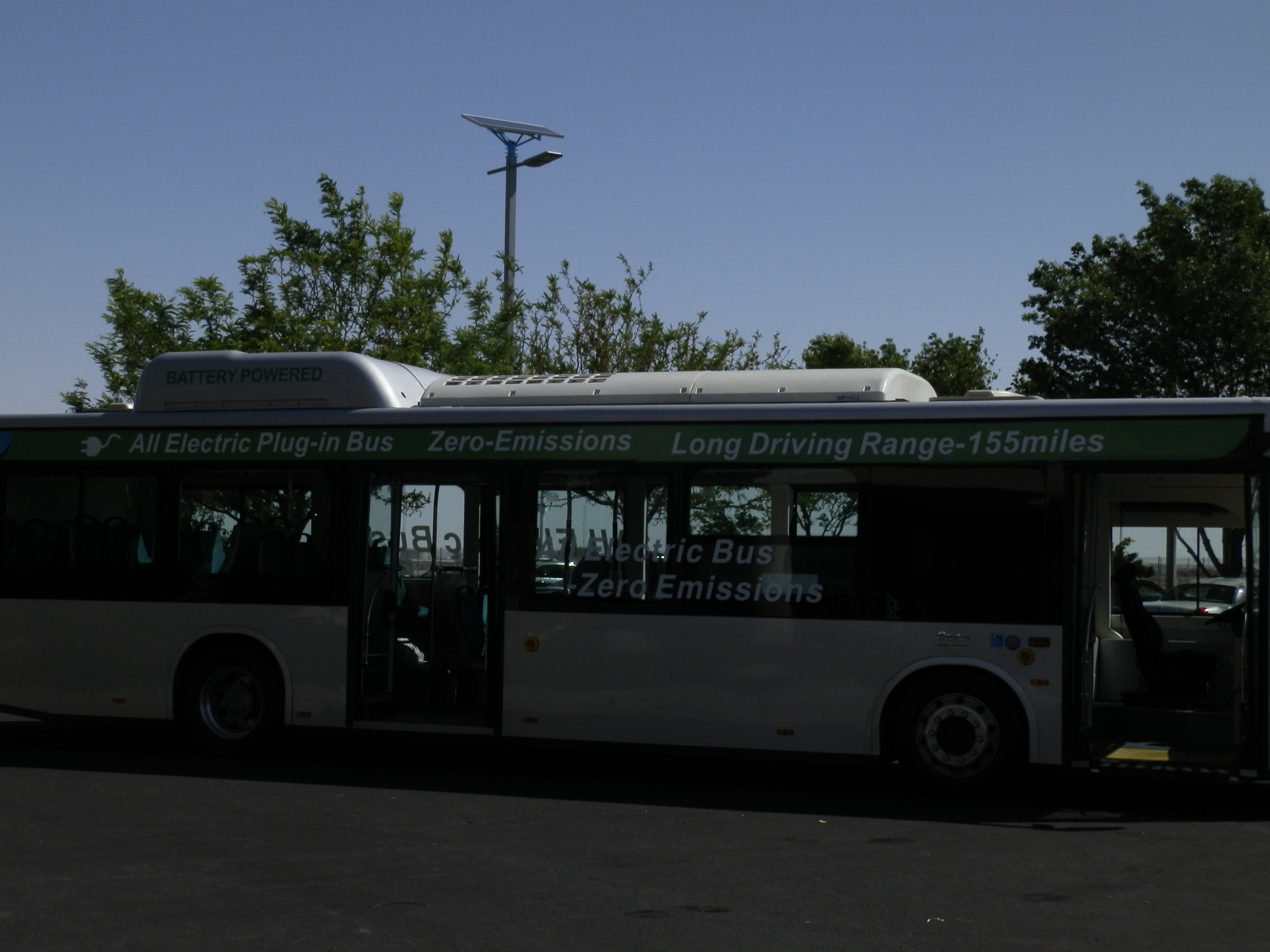
BYD electric bus at Lancaster, CA plant launch
This strategy is wrong on several levels. BYD will spend 3 billion yuan, or $480 million at current exchange rates, to build the plant, according to Chinese media. It will initially produce 1,000 K9 buses and, in a second phase whose cost was not revealed, it will assemble other BYD electric vehicles.
Selling to the Wuhan government is a challenge. The city is home to Dongfeng, one of China’s largest state-owned automakers (the former Third Auto Works). Dongfeng http://www.dfmc.com.cn is China’s largest producer of medium- and heavy-duty trucks. It just announced a partnership with Volvo to produce commercial vehicles. http://tinyurl.com/mr58azo And it partners with Nissan http://www.dongfeng-nissan.com.cn and PSA http://www.dpca.com.cn/ to produce passenger vehicles.
And, of course, Dongfeng has an obligatory Dongfeng EV Co. subsidiary. http://www.dfev.com.cn/dfev/publish/ According to its website, Dongfeng EV Co. produces hybrid electric buses as well as a range of small low-speed EVs and a tiny passenger EV. But I’ll bet it will start turning out plug-in hybrid electric vehicles, or battery electric vehicles, in the future as the central government pressures local governments to boost purchase of EVs. Why not produce those vehicles right in Wuhan so the money stays at home?
BYD may argue that the latest new energy vehicle policy from the central government requires at least 30% of such purchases be from automakers outside of the area and having a plant in Wuhan makes it the most likely company to grab those sales. Is that worth a $480 million bet?
If Wuhan were the only city where BYD has employed this strategy, it might be worth it But Wuhan will be the sixth city in China where BYD plans a bus plant. According to the press report, BYD also has agreements with Changsha, Nanjing, Tianjin, Dalian, and Hangzhou to assemble electric buses.
BYD is based in the south China city of Shenzhen, where it also produces electric buses, naturally. Will these additional plants merely assemble buses from kits sent from the Shenzhen plant? Probably. Then why not just drive the buses there from Shenzhen? No jobs or investment in the local where BYD hopes to sell buses, of course.
Internationally, BYD is also quickly expanding its manufacturing footprint. This is not a bad strategy. But does BYD have the human and financial capital to support this kind of expansion?
I am most familiar with BYD’s plans to produce electric buses in the city of Lancaster, near Los Angeles, where I live. That plant, the launch of which I attended in May of 2013, has encountered a series of potholes on the road to selling it buses here in California. Most recently, the southern California city of Long Beach announced it would cancel its contract to buy 10 BYD electric buses because BYD violated a California Labor Commission law in producing the buses. http://tinyurl.com/kkgjplp
BYD will be allowed to re-bid for the contract when the violation is corrected. BYD America senior vice president Stella Li said in a statement: “We are confident we will prevail in any competitive re-bid in the future for the same reason we prevailed last year: Our superior technology.”
This was not the first problem for the Lancaster plant, however. In July of 2013, cracks appeared above the rear door in a BYD bus undergoing federally-mandated tests. http://tinyurl.com/ltpdbd2 The cracks were a result of faulty welding at the plant in China where the bus was produced, said BYD. “There were no major design flaws discovered. However, there were some minor findings that we wanted to evaluate and review,” said Michael Austin, vice president of BYD America.
In November of 2013, BYD was hit with a $99,245 fine from the California Labor Commission for allowing workers to take one 20 minute break rather than two 10-minute breaks. BYD was also charged with under-paying some Chinese employees. The under payment charge was later dropped; the labor fine was reduced to $37,803. http://tinyurl.com/l97tzr3
None of these problems derailed BYD’s Lancaster plant plans. But they delayed the launch are costing BYD time and money to fix. Will they be repeated in other countries? BYD is also expanding its manufacturing footprint in other parts of the world. In 2012 it announced it would build electric buses in Bulgaria. It has also talked of plans to build a plant in Brazil and in Europe.
It might seem as if BYD has endless funding to build all these plants. That is not the case. The Hong Kong-listed company is raising money through stock sales. In late May it raised 3.4 billion yuan in its largest stock sale since the company’s 2002 initial public offering, according to Bloomberg.
Says Bloomberg: “The funds give Shenzhen-based BYD room to step up investments and bolster production of electric vehicles as governments worldwide step up efforts to fight pollution. Selling shares will also help alleviate the strain on a balance sheet saddled with surging debt.
The company has reason to raise funds via shares over bonds or loans. BYD’s net debt, or interest-bearing borrowings minus cash and equivalents, climbed 34 percent to a record 20.3 billion yuan ($3.3 billion) at the end of last year.”
BYD is betting that its electric vehicles will be its future. http://www.reuters.com/article/2014/05/23/china-byd-sales-idUSL3N0O915T20140523 Meanwhile, sales of its gasoline-powered vehicles have plunged, along with its profits. In the first quarter of 2014, BYD’s profits were down 89 percent. BYD also engages in other “green” industries, including solar panels, LED lighting, and batteries.
To be sure, profits did surge last year after BYD reduced its auto dealership network and reduced losses at its solar business with the help of government incentive money. That is not a sustainable growth plan, however. BYD’s belief that electric vehicles are the future may pay off. But building plants all over China and the world is a dangerous way to back up that belief.
China pushing auto JVs and suppliers to invest in EVs while it lags in infrastructure buildout
Suppliers and automakers are being forced by the Chinese government to take a leap of faith where electric vehicles are concerned. That is what I came away from Auto China thinking.
The companies are investing millions of dollars to supply and produce EVs in a country where the market for such vehicles is currently tiny. They don’t have much choice – Beijing is leaning on them very heavily to do so.
Many of those companies are keeping their fingers crossed that Beijing will pull some policy rabbit out of its hat to incentivize regular hybrid as well as electric vehicle sales, thus adding to the market for their products.
They also are also hoping Beijing will compel local governments to build out of charging station networks, without which there is little chance of a consumer market for EVs taking off.
An example of such investment: Siemens AG announced at the show that it had formed a joint venture with Chinese automaker Beijing Automotive Industry Holding Co. (BAIC) to produce components for electric vehicles.
Siemens holds 60 percent of the JV, which will start with small volume production this year at an existing Siemens plant in China while building a greenfield plant near Beijing, due to start production in 2015. No amount for the investment was announced, but it must be the equivalent of at least US $100 million.
“We believe in a new energy future, not just for pure electric vehicles but hybrid as well,” Jorg Grotendorst, CEO of Inside e-car, part of the Drive Technologies Division at Siemens AG told reporters gathered in a tent outside one of the giant exhibition halls at the Beijing International Exhibition Center.

Jorg Groendorst, CEO of Siemen’s Inside e-Car department, sees hybrids and EVs as the future.
He was part of a group of Siemens executives that had come to China to announce the formation of Beijing Siemens Automotive E-Drive Systems Co. Ltd., as the JV will be known. It will produce “highly efficient” inverters and motors for hybrid and battery electric vehicles, says Siemens. http://tinyurl.com/n8nwj6j
The new plant, which Siemens http://www.siemens.com says will begin volume production in 2015, will have an annual capacity more than 100,000 units per year. But exactly what kind of vehicles those components will go into isn’t clear, even to Siemens itself apparently
I asked the execs how they saw the market panning out in terms of BEVs versus PHEVs versus hybrids. Siemens didn’t know, said Grotendorst, but it believed PHEVs would be the interim technology.
They said Siemens is interested in BEVs and PHEVs (and hybrids as well judging by Grotendorst’s remark) and would supply BAIC, its initial customer, with power-electronics and electronic motors for its S, C, and L series cars.
However, the JV would start by supplying commercial vehicles, said an executive. Indeed, the plant’s components represent a hedging move on Siemen’s part – the performance scale of the models BAIC will use the components in ranges from 45 to 200kW says Siemens.
Size does matter and in this case it is small
Despite hyperbolic plans by the Chinese central government regarding electric vehicle production and sales, and incentives for BEVs and PHEVs, sales have thus far been miniscule.
In 2013 sales of battery-electric vehicles in China were 14,604 units according to the China Association of Automobile Manufacturers. Plug-in hybrid sales were 3,038 units. The total vehicle market was nearly 22 million. Most of those BEV and PHEV sales were likely to government fleets, which would include local bus and taxi fleets as those companies are generally owned by the local government.
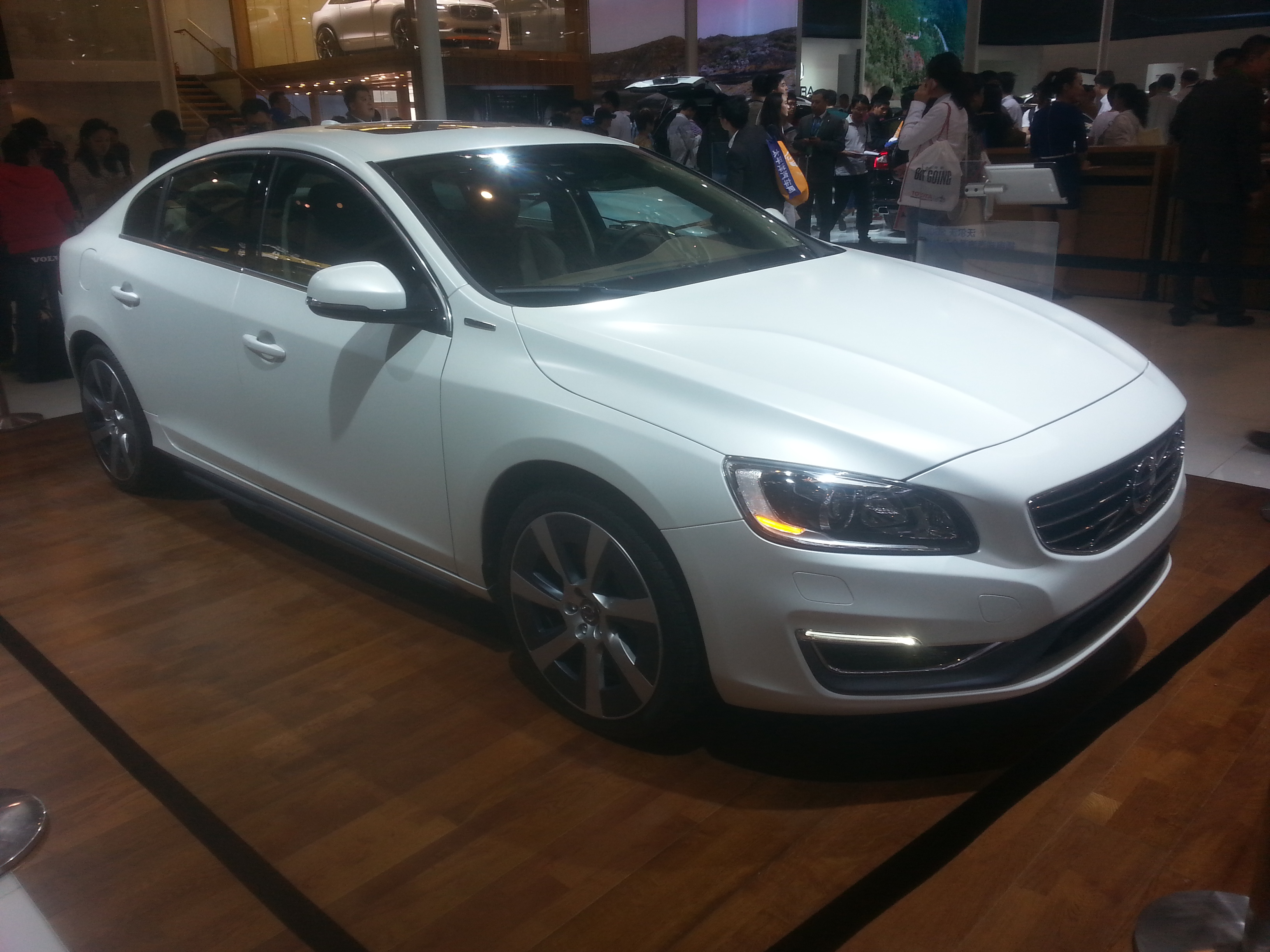
Volvo, now owned by China’s Geely Auto, showed this S60L PHEV concept at the Beijing show. But when it will come to market is unclear.
Siemens is right to place its near-term hopes in an expansion of PHEV sales, however. The charging station network in Chinese cities – even in Beijing, where you would think the government would try to set an example – is abysmally small. As my friend and former colleague Yang Jian pointed out in his column in Automotive News China, http://www.autonewschina.com at the end of 2013 Beijing had only 69 charging stations.
Yang, too, figures that PHEVs will be the most-utilized type of EV in the near term despite the fact that central government subsidies for BEVS are as high as 57,000 RMB (not counting local subsidies) and PHEVS only 33,500 RMB.
China recognizes that until battery costs come down and/or range comes up (which are linked since you can get a lot of range if you are willing to pay for it…) – and when that will occur is uncertain — a PHEV, which offers some pure electric range combined with an engine that runs on some liquid fuel, will be the most useful form of EV.
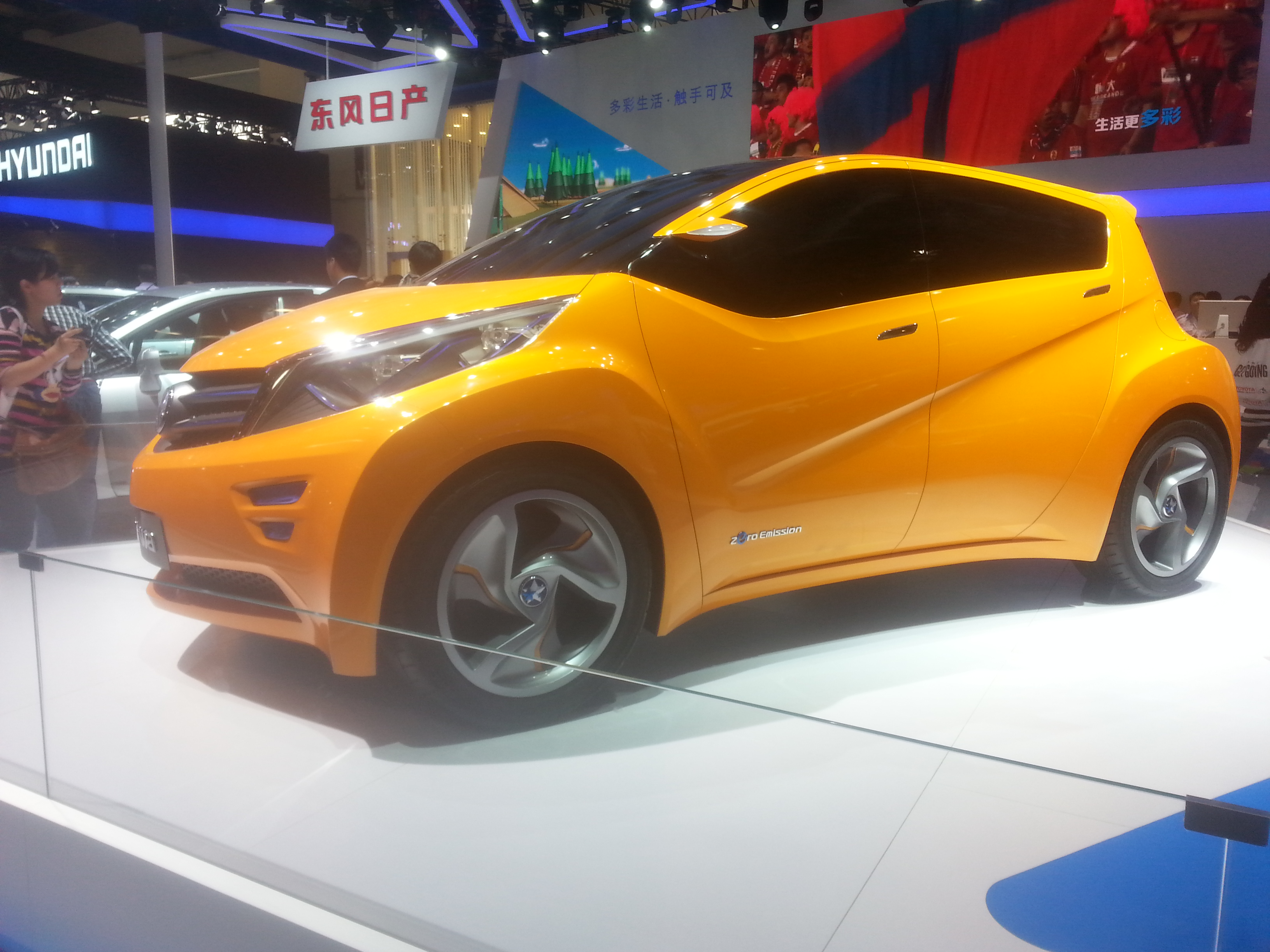
This BEV concept from Nissan partner Dongfeng might look familiar.
Suppliers recognize that some form of electrification is in China’s future. China has strict fuel economy deadlines looming in the future – the most intimidating the 2020 deadline for 5 liters per 100 kilometers. “This is a huge challenge for everyone right now,” David Xu, EVP at Bosch China, http://www.bosch.com told me at the show. Indeed, it is nigh impossible to achieve that without some form of at least mild electrification.
Bosch sees gasoline technology that boosts fuel efficiency — such as gasoline direct injection and turbocharging — as its biggest business opportunity in China in the near term. But it is also pushing its 48V mild hybrid system, which includes start-stop and a booster for starting and can boost fuel economy by 15 percent, says Xu.
Of course, Beijing hasn’t incentivized mild hybrid technology though that would help it achieve its goal of cutting back dependence on imported oil (though the western press seems fixated on the pollution in China and convinced that Beijing’s push for
EVs is tied to reducing pollution, much of China’s electricity is produced by burning coal so more EVs won’t necessarily have much impact on air quality. Cars are a convenient and visible scapegoat, however.) Nor is it currently incentivizing regular (i.e. non plug-in) hybrid cars. The Japanese hold too many patents in that area and Beijing doesn’t want incentive money to go to the Japanese automakers.
Meanwhile, Xu says new energy vehicles, which includes BEVs, PHEVs, and fuel-cell vehicles, won’t account for more than six percent of the market in 2020. Beijing’s inaction on building out a charging network – or even enforcing a national plug standard – is part of the problem, says Xu. “Talking about mass production to make a profit, it is really a struggle for everybody,” he says.
Still, automakers will continue to talk about investing, and actually invest, in EVs, he says. “This is kind of a political task for them,” he says. “They have to do it.”
An executive at another European supplier tells me that the joint venture automakers are telling him that Beijing is coming to them and saying, “You show us a plan to build an EV, homologate it here, and we will approve your expansion.”
Of course the individual consumer isn’t the only customer for EVs. Indeed, as I have written in this blog many time, fleet vehicles are the best market for both BEVs and PHEVs.

It is a problem that China has not standardized charging station plugs, but Siemens Industrial Sector CEO Siegfried Russwurm says the future is wireless.
Siemens recognizes that fact. It will start by supplying commercial vehicles, says Siegfried Russwurm, CEO of Siemens Industry Sector. As for the charging station issue, and the lack of standards where that is concerned, “The future is wireless,” he says.
Being a China watcher always involves parsing official statements to figure out who has the upper hand in Beijing and, if someone has some clout, what that person’s stand on an issue is. So I have been watching statements by Minister of Science and Technology Wan Gang http://www.chinavitae.com/biography/Wan_Gang%7C2917 and Minister of Industry and Information Technology Miao Wei http://www.chinavitae.com/biography/Miao_Wei%7C1317 to figure out where each stands and who might carry the day.
Suddenly, however, a new official – more important than the above two — has burst on the scene voicing strong support for the electric vehicle industry. Alas, I don’t think his support will result in a sudden rush of EV purchases.
The latest official to weigh in on the future of EVs in China is Ma Kei, a vice premier and Politburo member. http://www.chinavitae.com/biography/Ma_Kai%7C720 Let me thank my friend and former colleague Yang Jian for his column in Automotive News China http://www.autonewschina.com that helped me figure out the impact of statements by vice premier Ma Kai. Yang Jian says Ma is senior to both Miao and Wan and that he was instrumental in convincing the central government to cut purchase subsidies for battery-electric and plug-in hybrid electric vehicles by only 5 percent this year rather than the originally planned 10 percent. Ma apparently decided to push for the smaller cut in subsidies after visiting three local companies producing EVs, BYD Co http://www.byd.com , Jianghuai Automobile Co. http://www.jac.com.cn , and Chery Automobile Co. http://www.cheryinternational.com , in early January.
Besides urging more central government support for EV purchases, Ma hit on the other key points to putting more EVs on China’s roads: More use in public transportation fleets; more charging stations; less local protectionism. He also suggested waiving the 10 percent new vehicle purchase sales tax for EVs.
A bit of background: Last September, the central government issued a revised subsidy policy for electric vehicles which said that subsidies for various electric vehicles would decrease over the next two years. The 60,000 RMB subsidy for battery electric passenger vehicles was to decrease by 10 percent in 2014 and 20 percent in 2015. Subsidies of up to 35,000 RMB for plug-in hybrid electric passenger vehicles would fall by the same percentages. http://www.bbc.com/news/business-24140329
Apparently Ma Kai has managed to get those reductions revised to 5 percent in 2014 and 10 percent in 2015. And government support for the EV industry will continue after 2015, though details weren’t given. http://www.bloomberg.com/news/2014-02-09/china-reduces-electric-car-subsidy-cuts-in-air-quality-campaign.html
That’s great. But it won’t be enough to get Chinese consumers to buy electric vehicles in any volume. The initial subsidies did not encourage EV purchases in 2013 when some 17,600 plug-in electric vehicles were sold in China, including battery electric and plug-in hybrid electric. Most of those sales were almost certainly fleet vehicles. Chinese consumers still worry about the high price of vehicles that depend on technology they consider risky, not to mention the lack of a charging infrastructure.
Ma’s support won’t change that. What such statements do accomplish in China is to reassure companies that are producing or could produce electric vehicles that the government will still put their money where their mouth is. That will be enough to keep China’s automakers continuing to play lip service to their grand plans for EV production in order to get a piece of that EV subsidy money.
According to a supplier friend of mine, an executive at a large multinational supplier, what he hears from the local automakers is that they will keep trumpeting their plans to produce EVs, and producing some, to show Beijing they are ready to produce a lot of EVs if necessary, to meet stiffer fuel efficiency requirements for example (the U.S. automakers will be nodding their heads). “We do this as long as the government is funding it,” said an exec at one Chinese automaker.
Ma’s statements are still a positive in the overall picture, of course. It tips the scales on the side of optimism. Wan Gang has generally been more positive about EVs than Miao Wei though both talk about EVs as the future. Both worry about a factor that will certainly slow the growth of China’s EV sector and stifle competition and thus innovation – local protectionism.
Said Wan Gang: With the production and sales numbers of new energy vehicles China saw in 2013, “we can’t hope to realize the goal of 500,000” NEVs on the road by 2015. Between cooperation and competition, one is not more important than the other in growing the EV sector, said Wan. “Local protectionism is the biggest obstruction to more growth,” said Wan. Miao Wei also worried about local protectionism but perhaps more realistically ruminated on the need for less expensive technology to truly grow the sector.
Both are right. Ma’s rosy future won’t happen without an end to local protectionism and a technological leap.
I wrote the piece below for Automobile and Parts, a Chinese publication. http://view.online.zcom.com/full/33764/ Since I wrote it news came out that the State Grid will allow private investment in charging networks. http://view.online.zcom.com/full/33764/
But no timeline was mentioned. And no news re: Will South Grid follow suite. Allowing private investment offers a sliver of hope for Tesla. But as always in China, implementation will be the tricky part…..

Tesla’s business model – a non-automotive company that has successfully produced and marketed a pure electric luxury vehicle – seems to be much admired by some parties in China. And despite disputes regarding its distribution model with automotive dealers in some states in the U.S., Tesla http://www.teslamotors.com has sold well here. Based on that popularity, Tesla founder Elon Musk and his representatives in China are confidently predicting that Tesla will sell around 5,000 Model S electric sedans in China in 2014 and as many as 22,000 in 2015.
Those sales numbers are based on an underestimation of the difficulties Tesla will face in China, however, and won’t be achieved. Furthermore, Tesla will likely have trouble making a profit in China if the costs and difficulty of building out a distribution network and charging network are considered.
First, there is the price of the car itself. Tesla made a big deal out of the fact that it will charge “only” 734,000 RMB for a Model S sedan with an 85 kWh battery. That is the cost of the vehicle plus shipping and handling, customs and duties, and a value-added tax. Tesla’s electric vehicles come with several optional battery sizes; larger batteries cost more but provide more range. A car with an 85kWh battery provides about 300 miles per charge.
Tesla says it goal is to make the same level of profit per car no matter where it is sold. Even if Tesla isn’t making more profit, however, the price for the Model S is still more expensive then the majority of luxury cars sold in China. That price is not set in stone, by the way. Tesla will adjust the cost of the Model S in China when the USD/RMB exchange rate fluctuates, according to a Tesla spokesperson. Would someone prefer to buy an electric vehicle, even a Tesla, over say a similarly-priced gasoline-powered Porsche 911? Only a few would. http://www.forbes.com/sites/jackperkowski/2014/02/12/can-tesla-outsell-porsche-in-china/
If someone does want to buy a Tesla in China, they first have to find a Tesla store. Tesla’s distribution model relies on company-owned stores rather than franchised dealerships. In the U.S., cars are sold through dealerships owned by individuals rather than the automakers themselves. That has made Tesla the target of a handful of lawsuits here in the U.S. by the owners of dealerships. Those lawsuits claim Tesla violated the state laws governing auto dealer ownership (each of the 50 states in the U.S. has its own auto franchise law.).
In China, Tesla may not run into such lawsuits. But is will need to build out a nationwide Tesla store network to even begin to reach the sales numbers it predicts. http://www.sfgate.com/business/article/Tesla-s-Musk-sees-Model-S-China-sales-rivaling-5175447.php
So far, it has one store, in Beijing. Elon Musk has said Tesla will have stores or service centers in six metropolitan areas in China by the end of 2014. Let’s say Tesla succeeds in opening those stores by then. Will each of those stores manage to sell nearly 1,000 units each? Let’s assume they will. To achieve sales of 22,000 in 2015, Tesla will have to quadruple the number of stores it has in China, and each will have to sell nearly 1,000 units each.
I think distribution i.e. a network of stores will be the easy element of achieving Tesla’s ambitions in China, however. I believe the biggest barrier to its success will be its inability to construct a nationwide charging network. Rather than rely on public charging, Tesla constructs a network of Superchargers that only owners of its EVs can use. To date it has installed 74 Supercharger stations in North America. Each station costs US$150,000 to build, according to a Tesla spokesperson. This does not include maintenance or monthly energy costs. “We cannot yet speak to cost of location of Supercharger stations in China,” said the spokesperson. “Elon plans to visit in March and more details will be unveiled at that time.”
Elon may find that building Supercharger stations in China will be not only expensive, but very difficult. For one, each station charges at 120kw. “That is more power than an electric bus consumes,” exclaimed an executive working on EV charging networks at a foreign automaker in China.
He also asked if Tesla has approval from the State Grid http://www.sgcc.com.cn and the Southern Grid http://www.csg.cn , China’s two largest utilities, to construct the Supercharger network. That is, are they willing to provide the power? What’s in it for them? Then there are the Supercharger stations themselves, said the executive. Have they been approved by Chinese regulators?
Elon Musk has succeeded when others have thought he would fail, and his self-confidence is well-earned. He founded and sold Pay Pal, an online money transfer service, for $1.5 billion. Musk also founded and still runs SpaceX, a company which designs and launches rockets. In China, however, he may meet his match.
I like to talk to little-known (to me at least) companies operating in China’s electric vehicle world to get a broader perspective. In that spirit, when I saw a notice that a U.K.-based company called Sevcon http://www.sevcon.com had formed a joint venture with a Chinese supplier named Risenbo to supply motor controllers and other components to China’s electric vehicle makers http://www.marketwatch.com/story/sevcon-announces-electric-vehicle-joint-venture-in-china-2014-02-04-221844958, I sent a note to Matthew Boyle, Sevcon’s president and CEO, asking if we could chat.
Talking with Boyle opened a window for me to the many layers of the EV industry, and made me think again about how many companies will be disappointed if China doesn’t pull off its grand plan to produce lots of EVs. The opposite could also be true, or course. China may forge ahead and produce many EVs – though mainly for fleets, in my opinion.
Getting in on the ground floor as Sevcon is doing is the way to be positioned to benefit if China does turn into an EV-full country. That’s Matt Boyle’s attitude. “If you are prepared to take a long term view that China is a market that will grow substantially, if you’re not there now you will be too late,” he told me.
Sevcon produces inverters to change DC current into AC current, AC and DC motor controllers, DC/DC converters, and battery chargers for zero-emission vehicles and hybrids. “We try to take as much in electrical components as we can,” says Boyle.
Doing business worldwide, Sevcon has mostly marketed to companies supplying off-road vehicles such as quadracyles, as well as fork lifts and motorcycles.
But Sevcon’s components can also be used in on-road EVs, including fleet vehicles and passenger cars. With the Risenbo joint venture it hopes to capitalize on what many anticipate will be a growing demand in China for electric vehicles in the passenger car, commercial vehicle, and scooter segments. Sevcon’s on-road business has really taken off in the last two years, says Boyle. “We are well known in off-road market; what has become an emerging market for us is on-road,” he told ChinaEV.
As for its partner, I couldn’t find much info on Risenbo Technology Co. Ltd., other than that is Tier 1 Chinese supplier. The 50/50 joint venture will to be known as Sevcon (Hubei) New Energy Technology Co. Ltd. Boyle got to know Risenbo through an industry trade group in the U.K.
Risenbo already supplies components to automotive, bus, and truck manufacturers in China, according to Boyle. The joint venture will market Sevcon products in China targeting on-road applications. And since just about every vehicle producer in China is at least saying it will produce some EVs and the central government is telling local governments to add EVs to fleets, Risenbo could provide Sevcon with an excellent doorway into lucrative markets. Risenbo has mainly served large vehicle makers, says Boyle, but Sevcon’s products are scalable so it is targeting all vehicle segments.
Wisely, given the slowness of Chinese drivers to warm to EVs, Boyle says light commercial vehicles and busses seem to be the best market for its products right now. But, “passenger cars can’t be ruled out,” he says. And the latest EV policy, which ignored hybrids, is also to Sevcon’s advantage. There is no charger on board a hybrid, says Boyle. PHEVs and BEVs do have a charger on board. “If there is a charger on board it will double the revenue for us,” he says.
There are Chinese companies that produce similar products to Sevcon’s, such as Shanghai EDrive Co. Ltd. http://www.chinaedrive.com a company I visited and wrote about last October. Boyle admits that “the challenge in China is our selling prices have to be a modicum lower than in the rest of the world” to compete against local competitors. “Our quality and reputation give us somewhat of an advantage,” he says, “and our partner has a good reputation in China.”
Fortunately Sevcon has been doing contract manufacturing in China for export in a Free Trade Zone in Shanghai’s Pudong district for about 11 years. It won’t have to add capacity to serve the anticipated new domestic business, at least initially, says Boyle.
Companies manufacturing in China often worry about intellectual property protection; Sevcon has had IP issues in the past, says Boyle, but they have been small. “We aren’t unique in the world, but there aren’t that many people doing what we do so it is easy to spot what’s going on,” he says. Also, Sevcon’s customers are all large companies who also have something to lose if something goes on, he adds.
It will take a while to know if Sevcon’s China gamble has paid off. Product cycles in his industry are generally 18 months to three years, says Boyle. And what about all this news that China’s economic growth is slowing to perhaps as low as 7% this year and even lower in the future? “China’s GDP growth still means you are adding an economy the size of Singapore every year,” says Boyle.
Anyone who believes that the Chinese government and other players in the policy-making process have complete agreement on the readiness of China’s domestic companies to produce globally-competitive electric vehicles, or in how to bring them to that level, need only read the diverse commentaries that appear in the Chinese press to know that is not true.
Unlike the past, when debate was hidden behind closed doors and only the official line appeared in public, China’s media world is now filled with vibrant debate on topics so long as those topics don’t threaten the government’s hold on power. The EV industry falls into that category. Saying Chinese companies aren’t globally competitive is unlikely to produce social unrest, and there are plenty of opinions about their readiness on display.
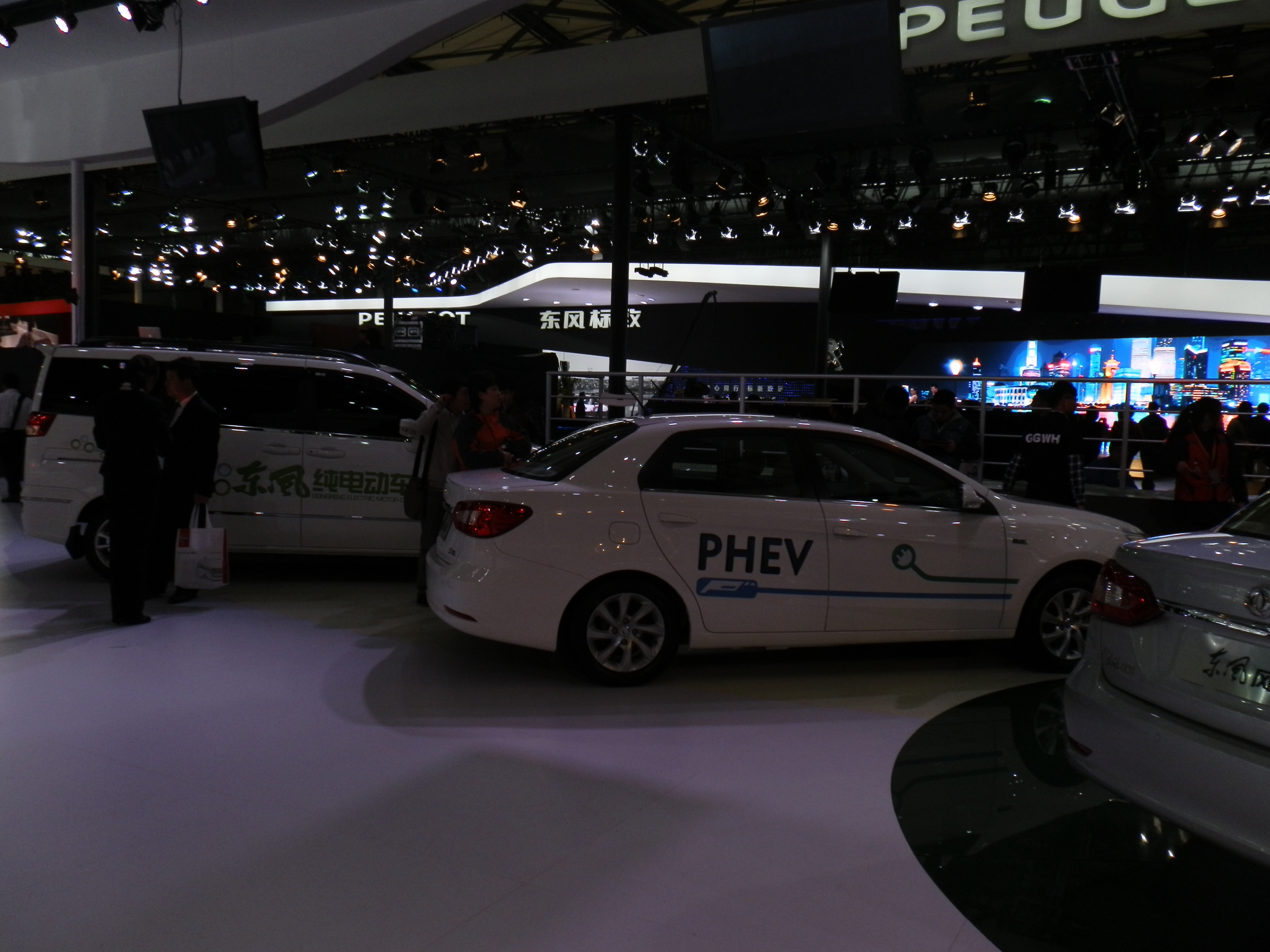
This PHEV by SAIC was on display at last years auto show but how much of the technology was developed by SAIC?
I recently read an excellent blog on that topic posted by Professor Wang Binggang, the team leader of the National Coordinating Office for Clean Vehicle Action (I confess not to know exactly what that is or where it falls in the whole power structure, but it seems to be associated with the 863 plan.) This is the link but for some reason is doesn’t work…. http://wangbinggangauto.sohu.com
Wang argues that China lags the global industry in the quality of its electric vehicles and that the real weakness is in the supply chain. He also draws a comparison with producers of China’s “traditional” i.e. internal combustion engine vehicles, who concentrated on producing the vehicle as a whole and thus have to rely on foreign companies for key technologies. Wang makes an excellent point. Is the entire development process in China stymied because of a lack of indigenous innovation or maybe just an unwillingness to take the time to innovate?
But let me start from the beginning. The beginning of Wang’s blog post, that is. He lays out the EV production numbers for 2013, which are dismally low though a big increase on 2012. China produced 17,533 new energy vehicles in 2013, up 39.7 percent on-year. That included 14,243 battery-electric vehicles and 3,290 plug-in hybrid electric vehicles. As for sales, in 2013 NEV sales totaled 17,642, up 37.9 percent on-year. That included 14, 604 battery-electric vehicles and 3,038 plug-in hybrid electric vehicles. Production of regular hybrid vehicles in 2013 was 14,463; sales were 15,101 units. (regular hybrids are not consider “new energy vehicles.”)
It seems China has had some success in the regular old hybrid bus world. It ranks number one worldwide in the number of hybrid buses on the road. China’s hybrid bus technology has reached world levels, Wang says. But hybrid technology is mature technology and in the area of electric vehicle innovation there is a big gap between China and the rest of the world, he says.
Wang traces this lack of innovation back to China’s weakness in tradition vehicle research and development. Indeed, though China’s domestic automakers have been producing cars for decades, those who do not have foreign partners still rely on foreign suppliers for technology such as automatic transmissions (okay, some Chinese OEs claim to have indigenously-developed ATs. But they trail foreign ATs by a long way…). And Chinese automakers who partner with foreign OEs generally rely on the foreign partner for certain complex systems.
This reliance on foreign partners is probably the underlying cause of Wang’s next reason for China’s slowness in developing EV technology: Lack of investment in research and development. Despite the policies to promote electric vehicle development in China, investment has been slow and it lacks good products. So the policies are “empty words,” says Wang.
He then falls back on that recent favorite towering example of how to develop electric vehicle technology: Tesla. www.teslamotors.com “Everyone is talking about Tesla these days,” says Wang. “I really favor this way of thinking. There are lots of things we should study about Tesla.” He indicates that the structure of U.S. society is more likely to produce innovation, so maybe there is a bit of revolutionary thinking here. Hmmm.
The main point is: Elon Musk was able to start an automotive company basically from scratch. Now that Tesla EVs are being sold in China, http://blogs.marketwatch.com/thetell/2014/01/28/tesla-hits-it-big-in-china-on-social-media-at-least/the country’s policy makers seem obsessed with Tesla’s road to success. I read that China is considering allowing non-automotive companies to jump into the EV sector because that could facilitate the rise of a Chinese Tesla. I won’t go into the merits, or lack thereof, of that position. But as one article I read pointed out, non-automotive companies are already jumping into the EV business by buying a shell automotive company.
But I digress. The main point of Wang’s blog is that China should concentrate more on developing the components that go into an EV than on producing the entire EV. “Electric and hybrid vehicle’s most critical technology is in the components,” says Wang. In China, the battery industry is the area where development has occurred most quickly, says Wang. But our battery technology is still not as good as a “great country’s.” Wow, those are fightin’ words. But true. As Wang points out, China’s battery producing companies still have to rely on foreign technology for many aspects in production and testing.
Finally, Wang discusses local protectionism and how that has hindered the development of indigenous EV technology. The latest NEV policy does call for 30 percent of NEV bus purchases by local government to be from a company outside of that area. But local protectionism still exists, says Wang, in the form of technical and permitting requirements that effectively keep all but local brands out of the market.
If local companies don’t face outside competition, they don’t have to innovate, says Wang, and fall farther and farther behind technologically. “We ought to operate according to the principle of equal competition in order to provide development opportunities for competitive local products,” Wang concludes, “thus promoting at the same time the rapid maturation of our new energy vehicle industry and its global competitiveness.” Wow, good stuff. Now let’s see if anyone is listening.
China seems to be firming up on its policy towards electric vehicles – at least for near-to-medium term. That is helping a U.S. company that has been trying to grow its toehold in China for several years. Efficient Drivetrains Inc. of Dixon, California has landed development contracts with several Chinese automakers and even attracted interest from some Chinese investors. The trick, as always, is to turn these contracts into volume production.
“There is no guarantee there will be volume, but we are trying to stay away from one-off demo projects,” says Joerg Ferchau, CEO of Efficient Drivetrains. “We only work with customers who have ability to do volume production.”
Full disclosure: I do some business development work with EDI, as Efficient Drivetrains usually goes by. So I’m always interested in how EDI’s business, especially in China, is developing!
The year is starting off with a bang. EDI www.efficientdrivetrains.com is working on four new contracts, three in China. And it has three funding offers, several from China. Of course this is just a start. For EDI to become a $100 million a year company, says Ferchau, “We need ten customers worldwide that go into mass production.”
EDI’s development contracts in China seem directly related to the recently-issued new energy vehicle policy that emphasizes electrification of municipal fleets. http://blogs.wsj.com/chinarealtime/2013/11/27/china-hopes-cities-can-help-boost-electric-car-sales/ Two contracts are for PHEV trucks, the other to engineer an electric car with a continuously variable transmission for the government of a south China city.
One of the PHEV truck contracts is to develop a 10,000-pound box truck for city deliveries. The demo truck is on a boat from China to the EDI headquarters in Dixon, where the drivetrain will be installed. One of the partners in the deal, a privately-owned company, owns a logistics fleet and will be an end customer for the truck. EDI is working with the partner to certify the vehicle and show it to local governments in China.
That truck should fit nicely with a mandate in the latest NEV policy, which says municipal fleets in China’s smaller cities should have at least 5,000 NEVs in them by 2015. Larger cities should have at least 10,000. And at least 30% of the new vehicle purchases for municipal fleets should be NEVs, according to the plan. http://www.chinadailyasia.com/business/2013-09/18/content_15088801.html
EDI is also building a low-cost PHEV SUV for a China. The body was produced by Xinkai Automobile Group in Hebei province, which supplies vehicles to local governments. Two automobile manufacturers are already interested in the PHEV SUV, says Ferchau.
Also on the city government theme, EDI has a contract from the government of the south China city of Dongguan to deliver five battery electric sedans with continuously variable transmissions. Ferchau claims this is the world’s first implementation of a CVT on a battery-electric vehicle.
The new policy may also be behind an expansion of EDI’s contract with Ankai Bus Co. http://www.hktdc.com/manufacturers-suppliers/Anhui-Ankai-Automobile-Co-Ltd/en/1X07WQ3R/ EDI developed a full-sized PHEV bus for Ankai, one of China’s largest bus makers. Now Ankai is talking with EDI about developing a smaller bus for city use, says Ferchau.
EDI is also busy here in the U.S. It is in talks with several utilities to provide PHEV fleet vehicles, says Ferchau.
The good and bad of all this activity, even in the U.S., is that it is mostly driven by government policy. The negative aspect of that driver is that it is not market-driven, organic demand. On the other hand, points out Ferchau, the policies have shifted the customer base to fleets where PHEV drivetrains make a lot of sense. He has an historic (and seven years is historic in EV terms) view of the market. When he first got involved seven years ago, says Ferchau, the motive for EVs was to save the planet. Then it was rising fuel prices, then economic development and job creation. “Now it is about the laws,” he says. “You have the mandates in place but the end customers are the people who operate fleets. They have needs for real vehicles.”
Of course, in China the law could change. And some claim that the emphasis is now shifting from electric vehicles to compressed natural gas (Oh yeah, I also wrote a blog pointing out how CNG was a more-discussed topic than EVs at a conference in Shanghai last October….). But I think electric vehicles will remain part of China’s long term plans for its vehicle fleets. And hey, EDI’s PHEV technology is fuel-agnostic. How about a PHEV CNG truck with CVT?
FAW-VW interested in Protean EV tech for China but will it lead to volume production?
In 2012 it seemed that every week a U.S. company with electric vehicle technology was announcing a China deal. That flood slowed to a steady stream in 2013 as Chinese companies and investors waited to see what technologies the government would support. Some companies I wrote about in those go-go days are no longer in business. So I was pleasantly surprised to see a press release a few weeks ago from Protean Electric www.proteanelectric.com announcing FAW-VW and Protean are cooperating to test Protean’s in-wheel EV propulsion system. FAW-Volkswagen is Volkswagen’s joint venture with First Auto Works in China. www.faw-vw.com
To be sure, Volkswagen has some ambitious electrification plans for the China market. I must say, however, that I am still skeptical that any long-term business deal resulting in volume production of vehicles with Protean’s technology will result from this cooperation.
I talked with Ken Stewart, vice president of business development at Protean, about the deal and how Protean’s business in China is going in general. The good news is that Protean’s in-wheel motors are drivetrain agnostic where EVs are concerned and can be used with PHEVs, BEVs, fuel cell vehicles, and hybrids. In China, where production often awaits government policy and government policy can change from year to year, that flexibility is useful.
Ken Stewart, VP of new business development at Protean, worked on GM’s EV1, a very early electric vehicle.
The most recent New Energy Vehicle Policy supports plug-in hybrid most strongly in the near term, and emphasizes electrification of municipal fleets. http://usa.chinadaily.com.cn/epaper/2013-09/18/content_16979336.htm Protean’s drivetrain slots into that space nicely. Protean’s current in-wheel electric drive system fits an 18-inch road wheel, which is the type on larger passenger vehicles and the upper half of the light commercial vehicle segment. It has regenerative capability to recapture energy from braking. And it can be included on a vehicle without major changes to the production process.
Stewart said the in-wheel motors and electronics cost $1,500 per wheel; the battery pack and battery management system control is extra. “It is a clean, easy way to get a hybrid,” Stewart told me. “Depending on the battery, you could get up to 30% better fuel economy and it is less expensive than retooling the whole car.”
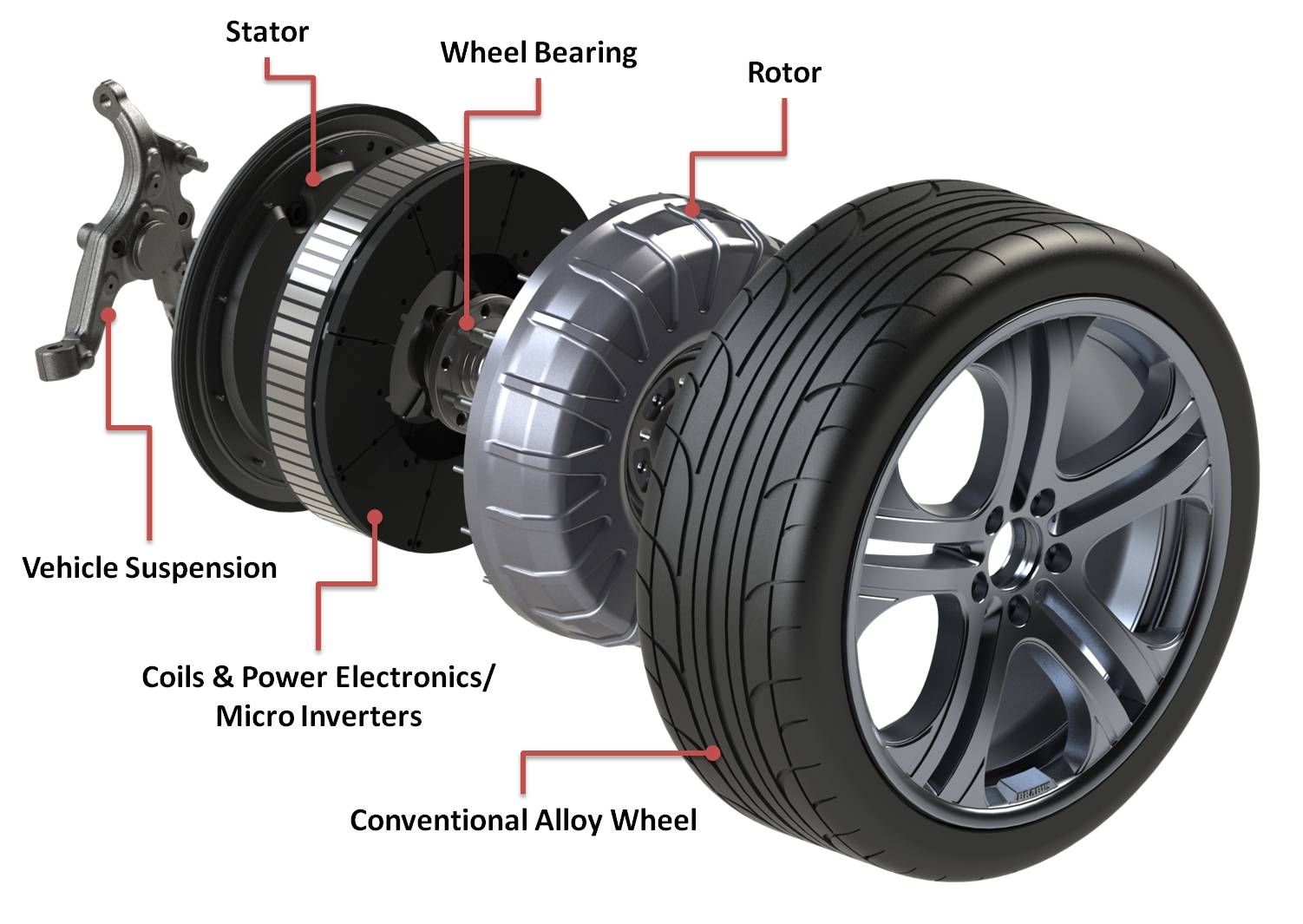
A bit of background, though you could just go to this link and read the press release: http://www.proteanelectric.com/en/media-center/news/ According the agreement, FAW-VW will produce an all-electric Bora sedan using two of Protean’s in-wheel motors. To quote the press release: “The motors reside in the space behind the wheel, producing torque and power exactly where and when drivers need it. Each in-wheel motor comes with its own power and electronics control packaged inside the motor, which communicates with the vehicle utilizing a common vehicle control system.”
Now of course Protean puts the best spin possible on this cooperation with FAW-VW, but right now the two companies are only doing what Stewart called “pre-engineering work.” That should be concluded in the first quarter of next year, he said. Then, “the intent is to move into the next phase of activity, which hasn’t been fully determined yet but is likely to include demonstration vehicles and engineering on par with what is required for a production vehicle.”
Warning to Protean: Chinese companies like to talk to suppliers about technology but not act on those talks. And as a friend at a very large multinational supplier said to me regarding how often that occurs, “our business is to do business” not demo products. Actually, Protean may feel the same way having already produced an extended range electric demo vehicle with Guangzhou Auto and Brabus. The Trumpchi 2WD EV debuted at the 2010 Guangzhou Auto Show and made an appearance at the Detroit Auto Show in 2013. GAC has another car using the motors -+going through tests, said Stewart. But volume production of any kind seems distant. So the gap between demo and any kind of volume production can be long.
But you gotta start somewhere, I suppose. Volkswagen has said it aims to launch at least 15 electric car models in China by 2018, and to begin production of electric cars in China in 2016. Using Protean’s in-wheel motors wouldn’t require much re-engineering, which could help VW meet this goal. If an automakers wants “more New Energy Vehicle technology on the road quicker and less expensively, then we are the answer,” said Stewart.
Automakers in China are also going to have to explore many different technologies to meet the 5 liter/100 kilometer fuel economy requirement by 2020. Protean’s solution is a good option to boost fuel economy on larger sedans, said Stewart. Assuming a 15-20 kWh battery and a European driving cycle, he predicts 35% improvement in fuel economy on larger vehicles “without having to change major tools or dies.”
The investors behind Protean’s China venture are the same ones as when I talked to Bob Purcell in 2012 plus, it seems. They are Oak Investment Partners www.oakvc.com , a Palo Alto, CA-based company; GSR Ventures www.gsrventures.cn , a Beijing-based company with offices in Palo Alto; a Liyang, China – based company called New Times Group; and the government of Liyang http://www.jiangsu.net/city/city.php?name=liyang .
I’m guessing Liyang’s investment is in the form or a sweet deal on the manufacturing facility that Protean is building there, which is running a bit behind schedule. Initially production was to start in early 2014, so Protean may not miss the mark by too much, however. It is “coming up into the area where we are spending money on capital equipment” for the factory, said Stewart. Protean is talking to other automakers in China about using its system, he added. “The customer demand is coming but not as fast as we’d like,” said Stewart.
As for when we might see 10 or more vehicles on the road in China with Protean’s in-wheel motors, around one year for captive fleet vehicles and 18 months for consumers, said Stewart. As for the few vehicles that are in testing right now, the feedback from FAW-VW has been very good, said Stewart. “We are seeing efficiencies that are delighting them,” he said.
He adds: “I am not doing this to have them go through a development program and change their mind.” Good luck with that.
Too much focus on BEVS means China could get left behind in electrification trends
Is China getting left behind in electrification trends by focusing on plug-in hybrid and battery electric vehicles? Is it ignoring alternatives that would achieve its goals of cutting emissions and reducing dependency on imported oil more quickly than full-on electrification? Paul Rivera, director of the global product group for hybrids and electrical systems at engineering firm Ricardo thinks so. “Up until about 2 years ago most of our activity was focused around full BEVs, PHEVs, HEVs. Now there is really strong push to get into mild hybridization,” he told me. Except in China, that is. “The Chinese OEMs are investigating range extenders and battery-electric vehicles,” says Rivera.
Now Rivera has a vested interest in touting mild hybridization, because Ricardo www.ricardo.co.uk sells that technology. But it still got me to thinking that maybe the Chinese government should be considering mild hybridization. That begs the question: Is China wasting time pursuing advanced technologies – especially pure electric vehicles — which may not ever represent a viable option for large scale adoption? Should it switch its focus to more available technologies, such mild hybridization?
I say no. The government should go right ahead and push BEVs and PHEVS. That is technology that will have a place, perhaps a big one, in future vehicle choices. But China’s government should also give a nod to mild hybridization.
The technology is ready to go. It is the automakers in China who will have to create a market for it, however. They can do that by producing vehicles with equipped with mild hybridization at a reasonable price. The automakers must make the case to consumers that the efficiency gained is worth the marginal extra cost. And since the automakers will likely have to include some mild hybridization in their vehicles to meet the 5 liter/100 kilometers fuel efficiency requirement, they better get busy.
What exactly is mild hybridization? For our purposes it means a more powerful start-stop system, one that uses a 48 volt battery combined with a relatively small battery and other systems such as regenerative braking to achieve fuel savings. Naturally Ricardo has such a product. Why else would Rivera by pimping the technology? Ricardo’s system is call HyBoost, and it can be added to vehicles for a little as $1,500 for up to 44 percent better fuel economy, says Rivera.
German automakers are the ones who first used a 48V system, says David Alexander of Navigant www.navigant.com . They wanted something bigger than a 12V in order to improve driveability of cars with start-stop. Cars with 48V systems are just starting to be produced, says Alexander. The 48V system will be included on high-end vehicles to improve improve the driving feel (not for performance) and fuel economy, he says. The 48V system won’t be an option, figures Alexander. “ It will just be hidden underneath,” he says. “The OEMs don’t want to frighten people off saying new tech. It will cost the OEMs, he says, but “they are doing it to meet mileage requirements in top end” vehicles. At the low-end 48V systems might not have much use except to add some ability to drive on pure electric power for small, light cars because they are so fuel efficient anyway, says Alexander.
Seems like technology that is perfect for China as well, right? Automakers there must meet stiff the new fuel economy goal by 2020. And, says an executive at a foreign automaker that is expanding in China, the batteries that will be needed for the 48V systems are the kind that China is pushing anyway, i.e. iron phosphate.
Even though there isn’t much interest in 48V systems in China now, Ricardo is hopeful. I guess it has to be since that’s what it wants to sell in China. And since European automakers such as BNW and Audi will have cars in Europe with the technology in the next few years, they will be the likely first to try to sell vehicles with 48V systems in China.
Ricardo’s strategic division forecasts that mild hybridization will be huge part of the mix in China within five to seven years, says Rivera. Possibly. If foreign automakers can make the case for it in China, their local partners might also introduce it. They should. China doesn’t want to get left behind.
Saab eyes China EV and ICE markets. Come on, get real.
Have you seen the news that the Swedish auto brand Saab isn’t dead? It has been re-born as a Swedish-Chinese company that will produce electric vehicles, mainly for the China market. Sound like a fantasy? It is, sort of. It seems the Saab’s new owner is counting on his connections in China to create a market for not only a gasoline-powered car by a company that has no recognition in China and a brand with little recognition, but also to launch an electric vehicle. Let me be blunt. This strategy will not be successful.
Saab’s assets were purchased by National Electric Vehicle Sweden (AB), www.saabcars.com whose founder and CEO is a Swedish-Chinese guy named Kai Johan Jiang. The company’s website says its aim is “to be a front-runner in the automotive industry, with a focus on electric vehicles.” NEVS is hedging its bets. It admits that not all consumers are ready to make the move to electric vehicles, so its first Saab vehicle is gasoline-powered.
Of course I don’t know anything about Kai Johan Jiang. He is an entrepreneur, it seems, with an interest in renewable energy. He owns an investment company in Beijing, State Holdings (which despite its name is privately held) that invests in a variety of clean energy companies. http://statepower.cn/ To be sure, China is all about clean energy these days. And Jiang may have fabulous guanxi, with the government in Qingdao, for one. It is one of the investors in NEVS.
But China is awash with domestic and foreign producers of gasoline-powered and now also electric vehicles whose brand names enjoy much more recognition and in many cases higher status than Saab. A newcomer such as NEVS has little chance of making it in China.
NEVS, despite its name, is not a dedicated EV producer. Indeed, it has started production of a gasoline-powered Saab 9-3 sedan. http://www.news.com.au/business/companies/new-owners-national-electric-vehicle-sweden-roll-out-first-saab-in-years-following-bankruptcy/story-fnda1bsz-1226773806041
According to the NEVS website (NEVS did not respond to an email request for comment), it is producing a very small volume of gasoline-powered vehicles, known as the Saab 9-3 Aero Sedan 2014, right now in Sweden. The plan is to sell the car in Sweden and China. If NEVS’s real purpose is to sell gasoline-powered mid-sized sedans in China that will be tough. The segment is already crowded with competitors such as the Toyota Camry, Honda Accord, and Buick Regal.
As for EVs, aside from saying that in 2014 it will launch an electric vehicle in China, NEVS has given no specifics about whether or not that will be a full electric, plug-in hybrid electric, or regular hybrid. I’d bet on a plug-in hybrid electric as the Chinese government is pushing PHEVs more strongly than BEVs in the near-term. But just about every domestic automaker in China, as well as foreign brands including Volkswagen and Nissan, plan to launch various types of electric vehicles in the next few years. “I don’t see any reason than an individual customer would spend money to buy a Saab EV,” says Kevin Huang of WAYS Consulting www.way-s.cn in Guangzhou.
Then there is the Saab brand itself. According to Huang, “the sales of Saab in the China market has always been poor.” From 2007 to 2011 it sold only 2,057 units in China. Sales ceased in the second half of 2011. I won’t even go into the fact NEVS lacks a dealership network. Or that BAIC, a large state-owned automaker, acquired the rights to an older Saab 9-3 model in 2009 and is now producing a gasoline-powered sedan on that technology and platform in China and has said it will produce an EV based on the same platform.
Okay you might say, NEVS could sell to government fleets. But the same competition issues apply. The government of Qingdao—which owns 22 percent of NEVS — has placed an order for 200 NEVS electric vehicles to be tested as taxis in the coastal city in northeastern China. In the future, says NEVS, it will produce both gasoline-powered vehicles and EVs in Qingdao. But Qingdao is not a huge market. And, the latest plan from Beijing to promote electric vehicles attempts to temper local favoritism by calling for local governments to make at least 30% of their new energy vehicle purchases from companies outside the locality.
Jiang seems to have deep pockets, and a real belief in renewable energy as a viable investment. That’s to be applauded. But I don’t see how his investment in Saab will pay off.
 Alysha Webb's ChinaEV Blog