The Connected Vehicle Security Act and the law of unintended consequences
Keeping Chinese vehicles — including EVs, let me add that so this blog has an EV angle, lol — out of the U.S. market is ostensibly the driving force behind the Connected Vehicle Security Act of 2026. But the Act has another element that would be almost impossible to enforce should it become law. Check out the “country of origin” stipulations for connected vehicle hardware or software. What does this mean for Chinese suppliers domiciled in the U.S.? Or Chinese suppliers with a long-standing manufacturing presence in the U.S.? I don’t think most people understand how ingrained components made by Chinese-owned or controlled companies are in the U.S. automotive supply chain.
I really got to thinking about this when I read the Automotive News story about Chinese automotive suppliers achieving a “tie with the U.S.” in the ranks of the top l00 list. Sure, it’s interesting that so many Chiense suppliers have significant market share in North America. But everyone knows that, right? This is what caught my eye under the “How the U.S., legacy supplier fared” subhed: “Among the U.S.-based suppliers in the top 100, only Qualcomm Inc. (36 percent) and Nexteer Automotive (7 percent) showed sizable 100 revenue gains for 2025.”
Wait a minute! Nexteer is a Chinese company. Sure, it is domiciled in Michigan and has a significant manufacturing base there. But it is listed on the Hong Kong Stock Exchange. And AVIC or Aviation Industry Corp of China, a state-owned aviation and defense company, is a controlling shareholder.
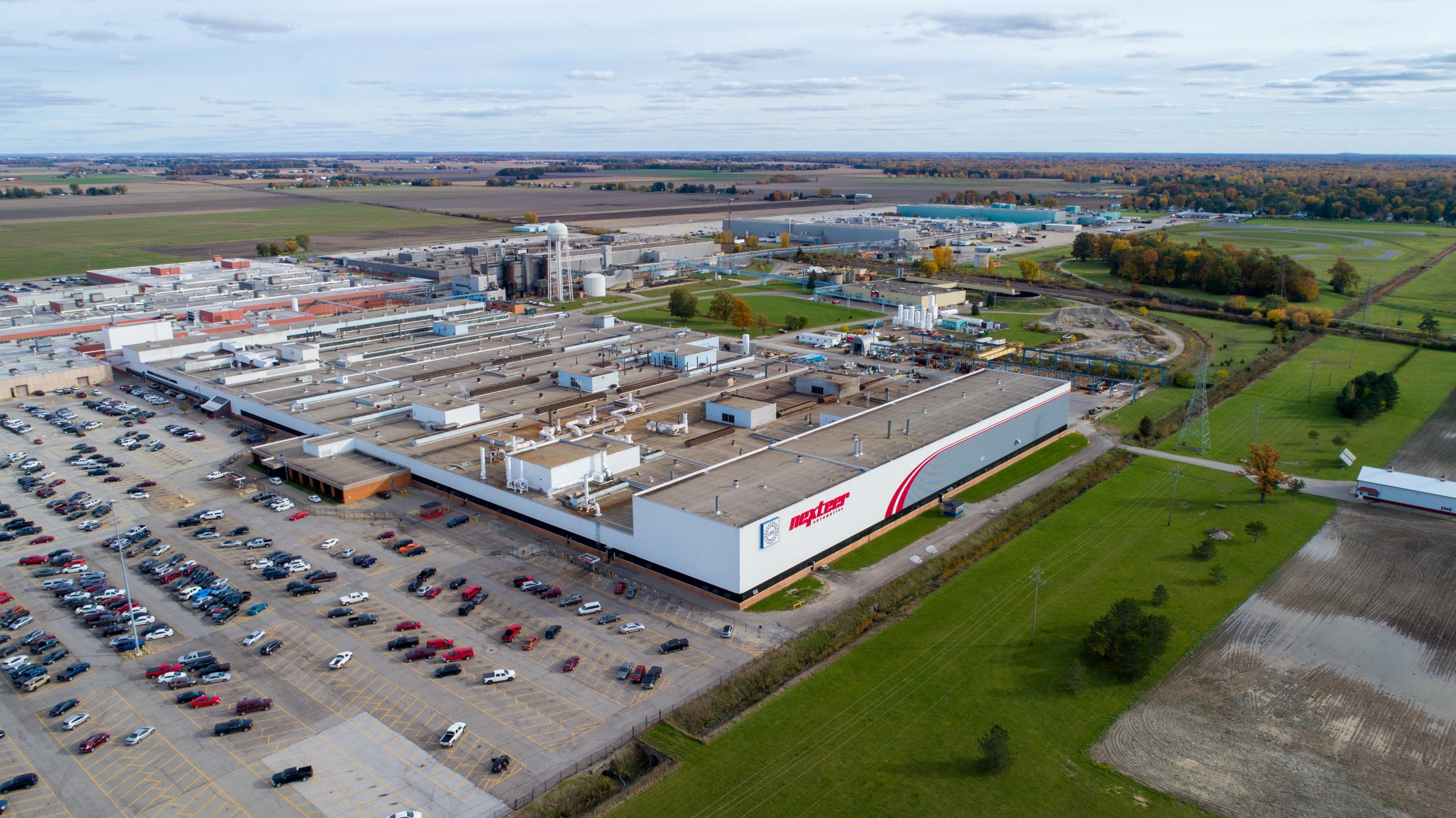
I checked with Eunice Lee, senior analyst and Asian Autos director at Bernstein, to confirm what I already knew to be true. She said: I don’t cover Nexteer. But I feel confident to say that Nexteer should be considered a Chinese company for all intended purpose.
- AVIC owns 70.11% of AVIC Auto (AVIC Automotive Systems Holding Co., Ltd.).
- AVIC Auto owns 72.88% of PCM China (Pacific Century Motors, Inc.).
- Beijing E-Town (Beijing E-Town International Investment & Development Co. Ltd.) is the second major shareholder. Its interest is held through its wholly-owned subsidiary, Beijing E-Town Auto:
- Beijing E-Town Auto holds an indirect interest in Nexteer via its 27.12% ownership of PCM China.
- PCM China wholly owns Nexteer Hong Kong (Nexteer Automotive (Hong Kong) Holdings Limited).
- Nexteer Hong Kong is the direct beneficial owner of 1,105,000,000 shares, representing a 44.03% ownership stake in the company.
- Additionally, Beijing E-Town Auto is a direct holder of Nexteer shares. As of May 2026, this direct stake consists of 324,248,000 shares, representing 12.92% of the issued share capital..
Nexteer aside, as Lee pointed out, Chinese suplliers already totally dominate the EV powertrain and software space with high-quality, competitively-priced products
And what about Chinese suppliers that have established manufacturing here, such as the Shanghai Baolong Automotive Corp and Luftride JV that was just established in North Carolina? I doesn’t seem that “electronically controlled air suspension components” fall under the connected car and/or software category in the bill, but I dunno. Electronically controlled may mean connected. Or at least using software.
Do Ohio Senator Bernie Moreno, a former (and maybe current) car dealer and Michigan Senator Elise Slotkin not understand how globally interconnected the automotive supply chain is? Already, if stringently applied, Mercedes won’t be able to sell vehicles in the U.S. under this bill. What if suppliers and manufacturers have to stop using every component that is made by a Chinese company? Because automotive supply chains include 1st, 2nd, 3rd, 4th, etc. tier suppliers.This is clearly another kind of law as well, the law of unintended consequences.
 Alysha Webb
 Alysha Webb's ChinaEV Blog