China seems to be firming up on its policy towards electric vehicles – at least for near-to-medium term. That is helping a U.S. company that has been trying to grow its toehold in China for several years. Efficient Drivetrains Inc. of Dixon, California has landed development contracts with several Chinese automakers and even attracted interest from some Chinese investors. The trick, as always, is to turn these contracts into volume production.
“There is no guarantee there will be volume, but we are trying to stay away from one-off demo projects,” says Joerg Ferchau, CEO of Efficient Drivetrains. “We only work with customers who have ability to do volume production.”
Full disclosure: I do some business development work with EDI, as Efficient Drivetrains usually goes by. So I’m always interested in how EDI’s business, especially in China, is developing!
The year is starting off with a bang. EDI www.efficientdrivetrains.com is working on four new contracts, three in China. And it has three funding offers, several from China. Of course this is just a start. For EDI to become a $100 million a year company, says Ferchau, “We need ten customers worldwide that go into mass production.”
EDI’s development contracts in China seem directly related to the recently-issued new energy vehicle policy that emphasizes electrification of municipal fleets. http://blogs.wsj.com/chinarealtime/2013/11/27/china-hopes-cities-can-help-boost-electric-car-sales/ Two contracts are for PHEV trucks, the other to engineer an electric car with a continuously variable transmission for the government of a south China city.
One of the PHEV truck contracts is to develop a 10,000-pound box truck for city deliveries. The demo truck is on a boat from China to the EDI headquarters in Dixon, where the drivetrain will be installed. One of the partners in the deal, a privately-owned company, owns a logistics fleet and will be an end customer for the truck. EDI is working with the partner to certify the vehicle and show it to local governments in China.
That truck should fit nicely with a mandate in the latest NEV policy, which says municipal fleets in China’s smaller cities should have at least 5,000 NEVs in them by 2015. Larger cities should have at least 10,000. And at least 30% of the new vehicle purchases for municipal fleets should be NEVs, according to the plan. http://www.chinadailyasia.com/business/2013-09/18/content_15088801.html
EDI is also building a low-cost PHEV SUV for a China. The body was produced by Xinkai Automobile Group in Hebei province, which supplies vehicles to local governments. Two automobile manufacturers are already interested in the PHEV SUV, says Ferchau.
Also on the city government theme, EDI has a contract from the government of the south China city of Dongguan to deliver five battery electric sedans with continuously variable transmissions. Ferchau claims this is the world’s first implementation of a CVT on a battery-electric vehicle.
The new policy may also be behind an expansion of EDI’s contract with Ankai Bus Co. http://www.hktdc.com/manufacturers-suppliers/Anhui-Ankai-Automobile-Co-Ltd/en/1X07WQ3R/ EDI developed a full-sized PHEV bus for Ankai, one of China’s largest bus makers. Now Ankai is talking with EDI about developing a smaller bus for city use, says Ferchau.
EDI is also busy here in the U.S. It is in talks with several utilities to provide PHEV fleet vehicles, says Ferchau.
The good and bad of all this activity, even in the U.S., is that it is mostly driven by government policy. The negative aspect of that driver is that it is not market-driven, organic demand. On the other hand, points out Ferchau, the policies have shifted the customer base to fleets where PHEV drivetrains make a lot of sense. He has an historic (and seven years is historic in EV terms) view of the market. When he first got involved seven years ago, says Ferchau, the motive for EVs was to save the planet. Then it was rising fuel prices, then economic development and job creation. “Now it is about the laws,” he says. “You have the mandates in place but the end customers are the people who operate fleets. They have needs for real vehicles.”
Of course, in China the law could change. And some claim that the emphasis is now shifting from electric vehicles to compressed natural gas (Oh yeah, I also wrote a blog pointing out how CNG was a more-discussed topic than EVs at a conference in Shanghai last October….). But I think electric vehicles will remain part of China’s long term plans for its vehicle fleets. And hey, EDI’s PHEV technology is fuel-agnostic. How about a PHEV CNG truck with CVT?
FAW-VW interested in Protean EV tech for China but will it lead to volume production?
In 2012 it seemed that every week a U.S. company with electric vehicle technology was announcing a China deal. That flood slowed to a steady stream in 2013 as Chinese companies and investors waited to see what technologies the government would support. Some companies I wrote about in those go-go days are no longer in business. So I was pleasantly surprised to see a press release a few weeks ago from Protean Electric www.proteanelectric.com announcing FAW-VW and Protean are cooperating to test Protean’s in-wheel EV propulsion system. FAW-Volkswagen is Volkswagen’s joint venture with First Auto Works in China. www.faw-vw.com
To be sure, Volkswagen has some ambitious electrification plans for the China market. I must say, however, that I am still skeptical that any long-term business deal resulting in volume production of vehicles with Protean’s technology will result from this cooperation.
I talked with Ken Stewart, vice president of business development at Protean, about the deal and how Protean’s business in China is going in general. The good news is that Protean’s in-wheel motors are drivetrain agnostic where EVs are concerned and can be used with PHEVs, BEVs, fuel cell vehicles, and hybrids. In China, where production often awaits government policy and government policy can change from year to year, that flexibility is useful.
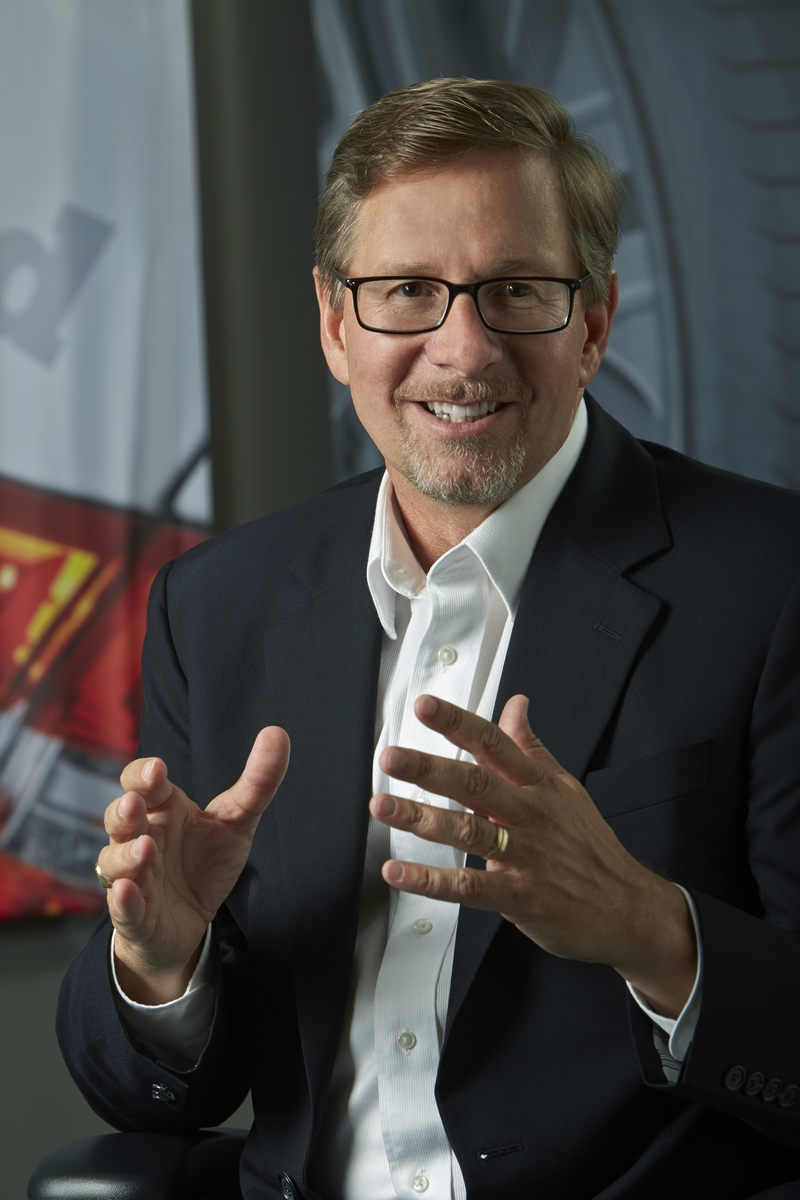
Ken Stewart, VP of new business development at Protean, worked on GM’s EV1, a very early electric vehicle.
The most recent New Energy Vehicle Policy supports plug-in hybrid most strongly in the near term, and emphasizes electrification of municipal fleets. http://usa.chinadaily.com.cn/epaper/2013-09/18/content_16979336.htm Protean’s drivetrain slots into that space nicely. Protean’s current in-wheel electric drive system fits an 18-inch road wheel, which is the type on larger passenger vehicles and the upper half of the light commercial vehicle segment. It has regenerative capability to recapture energy from braking. And it can be included on a vehicle without major changes to the production process.
Stewart said the in-wheel motors and electronics cost $1,500 per wheel; the battery pack and battery management system control is extra. “It is a clean, easy way to get a hybrid,” Stewart told me. “Depending on the battery, you could get up to 30% better fuel economy and it is less expensive than retooling the whole car.”
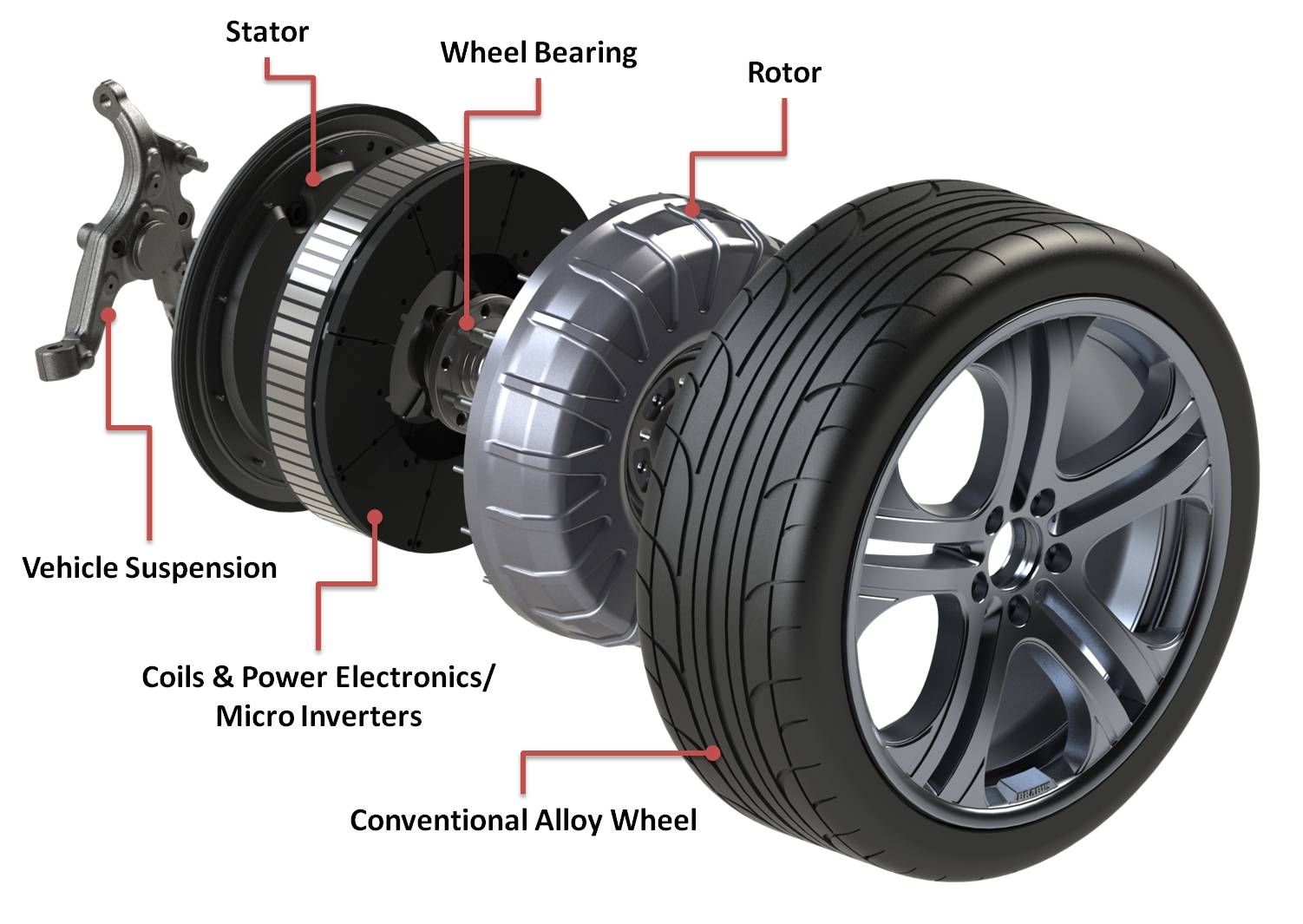
A bit of background, though you could just go to this link and read the press release: http://www.proteanelectric.com/en/media-center/news/ According the agreement, FAW-VW will produce an all-electric Bora sedan using two of Protean’s in-wheel motors. To quote the press release: “The motors reside in the space behind the wheel, producing torque and power exactly where and when drivers need it. Each in-wheel motor comes with its own power and electronics control packaged inside the motor, which communicates with the vehicle utilizing a common vehicle control system.”
Now of course Protean puts the best spin possible on this cooperation with FAW-VW, but right now the two companies are only doing what Stewart called “pre-engineering work.” That should be concluded in the first quarter of next year, he said. Then, “the intent is to move into the next phase of activity, which hasn’t been fully determined yet but is likely to include demonstration vehicles and engineering on par with what is required for a production vehicle.”
Warning to Protean: Chinese companies like to talk to suppliers about technology but not act on those talks. And as a friend at a very large multinational supplier said to me regarding how often that occurs, “our business is to do business” not demo products. Actually, Protean may feel the same way having already produced an extended range electric demo vehicle with Guangzhou Auto and Brabus. The Trumpchi 2WD EV debuted at the 2010 Guangzhou Auto Show and made an appearance at the Detroit Auto Show in 2013. GAC has another car using the motors -+going through tests, said Stewart. But volume production of any kind seems distant. So the gap between demo and any kind of volume production can be long.
But you gotta start somewhere, I suppose. Volkswagen has said it aims to launch at least 15 electric car models in China by 2018, and to begin production of electric cars in China in 2016. Using Protean’s in-wheel motors wouldn’t require much re-engineering, which could help VW meet this goal. If an automakers wants “more New Energy Vehicle technology on the road quicker and less expensively, then we are the answer,” said Stewart.
Automakers in China are also going to have to explore many different technologies to meet the 5 liter/100 kilometer fuel economy requirement by 2020. Protean’s solution is a good option to boost fuel economy on larger sedans, said Stewart. Assuming a 15-20 kWh battery and a European driving cycle, he predicts 35% improvement in fuel economy on larger vehicles “without having to change major tools or dies.”
The investors behind Protean’s China venture are the same ones as when I talked to Bob Purcell in 2012 plus, it seems. They are Oak Investment Partners www.oakvc.com , a Palo Alto, CA-based company; GSR Ventures www.gsrventures.cn , a Beijing-based company with offices in Palo Alto; a Liyang, China – based company called New Times Group; and the government of Liyang http://www.jiangsu.net/city/city.php?name=liyang .
I’m guessing Liyang’s investment is in the form or a sweet deal on the manufacturing facility that Protean is building there, which is running a bit behind schedule. Initially production was to start in early 2014, so Protean may not miss the mark by too much, however. It is “coming up into the area where we are spending money on capital equipment” for the factory, said Stewart. Protean is talking to other automakers in China about using its system, he added. “The customer demand is coming but not as fast as we’d like,” said Stewart.
As for when we might see 10 or more vehicles on the road in China with Protean’s in-wheel motors, around one year for captive fleet vehicles and 18 months for consumers, said Stewart. As for the few vehicles that are in testing right now, the feedback from FAW-VW has been very good, said Stewart. “We are seeing efficiencies that are delighting them,” he said.
He adds: “I am not doing this to have them go through a development program and change their mind.” Good luck with that.
Too much focus on BEVS means China could get left behind in electrification trends
Is China getting left behind in electrification trends by focusing on plug-in hybrid and battery electric vehicles? Is it ignoring alternatives that would achieve its goals of cutting emissions and reducing dependency on imported oil more quickly than full-on electrification? Paul Rivera, director of the global product group for hybrids and electrical systems at engineering firm Ricardo thinks so. “Up until about 2 years ago most of our activity was focused around full BEVs, PHEVs, HEVs. Now there is really strong push to get into mild hybridization,” he told me. Except in China, that is. “The Chinese OEMs are investigating range extenders and battery-electric vehicles,” says Rivera.
Now Rivera has a vested interest in touting mild hybridization, because Ricardo www.ricardo.co.uk sells that technology. But it still got me to thinking that maybe the Chinese government should be considering mild hybridization. That begs the question: Is China wasting time pursuing advanced technologies – especially pure electric vehicles — which may not ever represent a viable option for large scale adoption? Should it switch its focus to more available technologies, such mild hybridization?
I say no. The government should go right ahead and push BEVs and PHEVS. That is technology that will have a place, perhaps a big one, in future vehicle choices. But China’s government should also give a nod to mild hybridization.
The technology is ready to go. It is the automakers in China who will have to create a market for it, however. They can do that by producing vehicles with equipped with mild hybridization at a reasonable price. The automakers must make the case to consumers that the efficiency gained is worth the marginal extra cost. And since the automakers will likely have to include some mild hybridization in their vehicles to meet the 5 liter/100 kilometers fuel efficiency requirement, they better get busy.
What exactly is mild hybridization? For our purposes it means a more powerful start-stop system, one that uses a 48 volt battery combined with a relatively small battery and other systems such as regenerative braking to achieve fuel savings. Naturally Ricardo has such a product. Why else would Rivera by pimping the technology? Ricardo’s system is call HyBoost, and it can be added to vehicles for a little as $1,500 for up to 44 percent better fuel economy, says Rivera.
German automakers are the ones who first used a 48V system, says David Alexander of Navigant www.navigant.com . They wanted something bigger than a 12V in order to improve driveability of cars with start-stop. Cars with 48V systems are just starting to be produced, says Alexander. The 48V system will be included on high-end vehicles to improve improve the driving feel (not for performance) and fuel economy, he says. The 48V system won’t be an option, figures Alexander. “ It will just be hidden underneath,” he says. “The OEMs don’t want to frighten people off saying new tech. It will cost the OEMs, he says, but “they are doing it to meet mileage requirements in top end” vehicles. At the low-end 48V systems might not have much use except to add some ability to drive on pure electric power for small, light cars because they are so fuel efficient anyway, says Alexander.
Seems like technology that is perfect for China as well, right? Automakers there must meet stiff the new fuel economy goal by 2020. And, says an executive at a foreign automaker that is expanding in China, the batteries that will be needed for the 48V systems are the kind that China is pushing anyway, i.e. iron phosphate.
Even though there isn’t much interest in 48V systems in China now, Ricardo is hopeful. I guess it has to be since that’s what it wants to sell in China. And since European automakers such as BNW and Audi will have cars in Europe with the technology in the next few years, they will be the likely first to try to sell vehicles with 48V systems in China.
Ricardo’s strategic division forecasts that mild hybridization will be huge part of the mix in China within five to seven years, says Rivera. Possibly. If foreign automakers can make the case for it in China, their local partners might also introduce it. They should. China doesn’t want to get left behind.
Saab eyes China EV and ICE markets. Come on, get real.
Have you seen the news that the Swedish auto brand Saab isn’t dead? It has been re-born as a Swedish-Chinese company that will produce electric vehicles, mainly for the China market. Sound like a fantasy? It is, sort of. It seems the Saab’s new owner is counting on his connections in China to create a market for not only a gasoline-powered car by a company that has no recognition in China and a brand with little recognition, but also to launch an electric vehicle. Let me be blunt. This strategy will not be successful.
Saab’s assets were purchased by National Electric Vehicle Sweden (AB), www.saabcars.com whose founder and CEO is a Swedish-Chinese guy named Kai Johan Jiang. The company’s website says its aim is “to be a front-runner in the automotive industry, with a focus on electric vehicles.” NEVS is hedging its bets. It admits that not all consumers are ready to make the move to electric vehicles, so its first Saab vehicle is gasoline-powered.
Of course I don’t know anything about Kai Johan Jiang. He is an entrepreneur, it seems, with an interest in renewable energy. He owns an investment company in Beijing, State Holdings (which despite its name is privately held) that invests in a variety of clean energy companies. http://statepower.cn/ To be sure, China is all about clean energy these days. And Jiang may have fabulous guanxi, with the government in Qingdao, for one. It is one of the investors in NEVS.
But China is awash with domestic and foreign producers of gasoline-powered and now also electric vehicles whose brand names enjoy much more recognition and in many cases higher status than Saab. A newcomer such as NEVS has little chance of making it in China.
NEVS, despite its name, is not a dedicated EV producer. Indeed, it has started production of a gasoline-powered Saab 9-3 sedan. http://www.news.com.au/business/companies/new-owners-national-electric-vehicle-sweden-roll-out-first-saab-in-years-following-bankruptcy/story-fnda1bsz-1226773806041
According to the NEVS website (NEVS did not respond to an email request for comment), it is producing a very small volume of gasoline-powered vehicles, known as the Saab 9-3 Aero Sedan 2014, right now in Sweden. The plan is to sell the car in Sweden and China. If NEVS’s real purpose is to sell gasoline-powered mid-sized sedans in China that will be tough. The segment is already crowded with competitors such as the Toyota Camry, Honda Accord, and Buick Regal.
As for EVs, aside from saying that in 2014 it will launch an electric vehicle in China, NEVS has given no specifics about whether or not that will be a full electric, plug-in hybrid electric, or regular hybrid. I’d bet on a plug-in hybrid electric as the Chinese government is pushing PHEVs more strongly than BEVs in the near-term. But just about every domestic automaker in China, as well as foreign brands including Volkswagen and Nissan, plan to launch various types of electric vehicles in the next few years. “I don’t see any reason than an individual customer would spend money to buy a Saab EV,” says Kevin Huang of WAYS Consulting www.way-s.cn in Guangzhou.
Then there is the Saab brand itself. According to Huang, “the sales of Saab in the China market has always been poor.” From 2007 to 2011 it sold only 2,057 units in China. Sales ceased in the second half of 2011. I won’t even go into the fact NEVS lacks a dealership network. Or that BAIC, a large state-owned automaker, acquired the rights to an older Saab 9-3 model in 2009 and is now producing a gasoline-powered sedan on that technology and platform in China and has said it will produce an EV based on the same platform.
Okay you might say, NEVS could sell to government fleets. But the same competition issues apply. The government of Qingdao—which owns 22 percent of NEVS — has placed an order for 200 NEVS electric vehicles to be tested as taxis in the coastal city in northeastern China. In the future, says NEVS, it will produce both gasoline-powered vehicles and EVs in Qingdao. But Qingdao is not a huge market. And, the latest plan from Beijing to promote electric vehicles attempts to temper local favoritism by calling for local governments to make at least 30% of their new energy vehicle purchases from companies outside the locality.
Jiang seems to have deep pockets, and a real belief in renewable energy as a viable investment. That’s to be applauded. But I don’t see how his investment in Saab will pay off.
I recently attended (and moderated a panel at) the Clean Truck and Bus Summit in Shanghai. www.calstart.org Of course the first topic that came to my mind was electric vehicles. But this conference looked at the full range of alternative fuels. And one that was discussed much more than electrification was compressed natural gas, or CNG.
CNG is abundant, cheaper than diesel, and cleaner burning than diesel or gasoline. But the growth of a CNG fleet in China faces one of the same obstacles that growing an EV fleet faces, namely lack of a refueling infrastructure. There are also supply questions – China is just beginning to try to get at its plentiful natural gas reserves. China is estimated to have the largest reserve of shale gas in the world at 1,275 trillion cubic ft. But that gas is deeper and tighter than reserves in the U.S., and China lacks the technology to recover it. China’s state-own petroleum companies have been on an acquisition spree, however, buying western companies that do have that technology. The U.S. has plenty of natural gas, and could selling some of it to China could help our trade deficit with China. http://www.brookings.edu/blogs/up-front/posts/2013/11/07-shale-energy-revolution-china-downs That might occur but there are, as always were China is concerned, political objections.
Then there is the actual supply in China of vehicles that run on CNG. There are few passenger vehicles. The number of commercial vehicles is also still small though growing. But that is less of a barrier than those listed above, according to my industry friends. Commercial vehicle manufacturers such as Navistar www.navistar.com are eyeing the CNG segment as are Chinese truck makers.
CNG has advantages as a fuel over electric vehicles in the pollution area, as well, at least in the near to medium-term. It is more clean-burning than gasoline or diesel. While electric vehicles don’t produce any omissions, in China the electricity to charge them is largely produced by burning coal, defeating the purpose where cleaning up the air is concerned.
Boosting the number of CNG vehicles on the road would also help reduce China’s dependence on foreign oil, a huge concern of the Chinese government. But a large-scale switch to CNG might simply transfer that dependence to imported natural gas, at least until China is able to get at its natural gas reserves, which are trapped in shale formations. http://blogs.wsj.com/washwire/2013/11/07/china-hesitates-as-washington-oks-natural-gas-exports/ Still, that seems a short-term issue rather than a systemic one. http://www.forbes.com/sites/jackperkowski/2013/06/13/shale-gas-chinas-untapped-resource/
Estimates of the size of China’s CNG vehicle fleet by 2020 suggest that most feel those obstacles will be overcome. WAYs Consulting, www.way-s.cn based in Guangzhou, estimates that China will rank number one in the world in ownership of CNG vehicles in China by 2020 at 3.5 to 4.5 million vehicles. CNG will be more popular in some provinces than others, however. WAYS forecasts that by 2015, when the total number of CNG vehicles in China will be 2.3 to 2.5 million vehicles, 10 provinces will have more than 100,000 CNG vehicles. The standouts include Xinjiang and Sichuan at more than 400,000 each and Shandong at more than 300,000. As for infrastructure, WAYS figures there will be up to 5,000 natural gas stations in China by 2020.
Consultancy ATKearney www.atkearney.com is more bullish on CNG in China than on electric vehicles, though CNG fueling infrastructure is still a major constraint to developing the market for CNG vehicles, Bill Ding of ATKearney told the Clean Truck and Bus Summit. Ding compared the technology and customer acceptance for CNG, battery-electric, and hybrid medium-duty and heavy-duty commercial vehicles. CNG wins against both BEVs and HEVs. The technology is mature and customer acceptance high with CNG, said Ding.
On the other hand, battery electric vehicle technology for trucks is not mature and there are lots of doubts about both the technology and charging infrastructure, he said. As for HEVs, though there has been investment in hybrids because of government support, the battery and battery control technology gap in China is still large compared to other places, he said. Customer acceptance is therefore low.
Growing the number of “clean” medium-duty commercial vehicles is crucial because they accounted for nearly half of the NOX emissions in China in 2011 and 61% of the PM emissions, according to ATKearney. Still, HEV commercial vehicle sales will top those of CNG units in 2020 in both the medium and heavy duty segments, according to ATKearney.
It forecasts the market for medium duty HEV commercial vehicle sales at 850,000 units in 2020. The medium-duty CNG truck market is forecast to be 710,000 units in 2020 and the market for battery-electric units will be zero. Yep, that’s right, zero.
The market for battery-electric drivetrain sales will for some reason be a bit bigger in 2020 in the heavy-duty truck segment, at 5,000 units. Hybrid electric heavy-duty sales in 2020 are forecast to be 360,000 units and CNG sales 200,000.
If these forecasts turn out to be true, there is a clear opportunity for suppliers of components to produce CNG-powered commercial vehicles. There will also be a market for components that convert gasoline-powered vehicles to CNG.
And there are already signs that municipal governments like CNG. Beijing plans to have 5,000 CNG-powered taxis by 2015 and 7,000 CNG-powered buses. http://usa.chinadaily.com.cn/china/2013-06/05/content_16567154.htm And I’m sure there are many other examples that I just don’t know about.
Does this mean CNG will replace electrification in China? Hardly. Merely that it is a more suitable solution in the near term to achieve the government’s goals of reducing dependence on foreign oil and having cleaner air.
China’s central government has tweaked its approach to growing the country’s New Energy Vehicles segment (see my blog of September 20 on latest NEV policy), but it still aims to have tens of thousands of battery electric and plug-in-hybrid electric vehicles on the road in a few years.
If you don’t think China is committed to EVs for the long haul, consider this. In September of 2012, an “EV Experience Center” was established at the Party School of the Central Committee of the Communist Party of China. The Party School is where promising candidates for leadership roles in China go to debate ideas. https://www.facebook.com/pages/Central-Party-School-of-the-Communist-Party-of-China/102921913083319?rf=108563155844465 (The Central Party School has a Facebook page, though FB is blocked in China. Can you say irony?)
Of course they don’t debate any ideas in public. But they can at least get it out of their system at the Party School. Now, they can also drive an electric vehicle, which gives them some hand’s on experience as they debate what role EVs (or in Chinese parlance, NEVS or New Energy Vehicles) should play in China’s auto industry.
Meanwhile, local governments are doing their part to promote EVs with additional subsidies and incentives as well as research and development and data collection. The efforts extend down to the district level. One reason for district involvement is that it gives the districts a shot at some of those fat central government ministry budgets. That doesn’t mean what the districts are doing isn’t valuable, however.
Take Jiading District, part of the huge Shanghai metropolis. http://english.jiading.gov.cn/ Jiading has had itself designated an “EV International Pilot Zone” within Shanghai, which is an “EV International Pilot City.” A few weeks ago, I visited Jiading and met with Lucas Cao Yue, project manager in the New Energy Cause Department at the Shanghai International Auto City Group Co. (SIAC). http://www.shautocity.com/english/cczl-01.htm One of the first slides that appeared on the Powerpoint presentation he showed me on his laptop showed that Jiading has the stamp of approval from the Ministry of Science and Technology, the Ministry of Information Industry Technology and the Ministry of Commerce.
Much more than in the U.S., the promotion of an electric vehicle industry in China is a government project. Why are those important? I asked. “It means we have a chance to get part of their budget,” Cao explained. The Ministries contribute 60% toward the budget of certain projects, Cao explained. But Jiading still has to cover the remaining 40%, he added.
Finding the funds shouldn’t be a problem for Jiading. Jiading’s Anting area, where SIAC has its offices, is home to a huge Shanghai Volkswagen plant, an F-1 race track, an automobile museum, and the research and development centers of many multinational suppliers. They were strongly encouraged to open those centers in Jiading, my supplier friends tell me. Jiading is planning a 120,000 square meter R&D port, with many foreign enterprises.
But Jiading really is doing some useful work where EVs are concerned. The EV Zone is dedicated to “seeking the best integration between city, life and new energy vehicles.” One issue it is already facing – one that cities in the U.S. are familiar with – is the best placement for charging stations. Jiading has 800 public charging stations, said Cao. But 40 are in one area, which isn’t working so well. (About a dozen ring the building that houses the SIAC office, which seems a bit self-centered….)
The EV Zone also includes EV car-sharing, an EV rental plan, an EV service center that can import EVs without having to go through cumbersome Customs procedures, and free EV test drives to the public. Each month it holds an event to introduce the public to EVs. To date some 80,000 people have tried out an EV, said Cao.
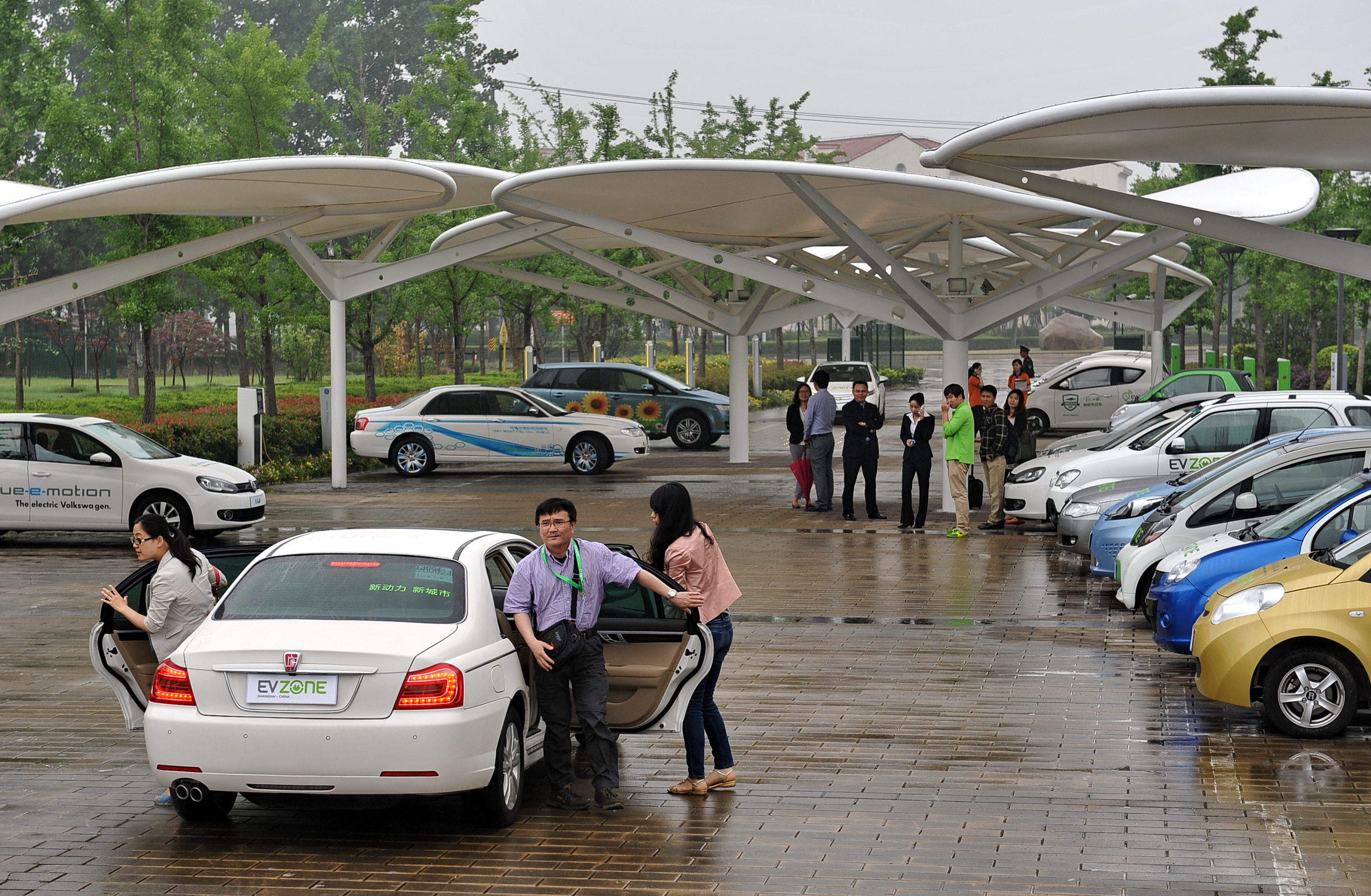
Some 80,000 people have taken test drives in EVs in Jiading.
The EV Zone surveys those who take the test drives about their likes and dislikes regarding the vehicles, and their purchase intents. It also has a fleet of 160 EVs that it collects usage data on. That data, and the user survey results, are shared with the automakers –both foreign and domestic – who are shareholders in Shanghai International Auto City Group Co. Ltd.
Other trials, such as the EV car-sharing, are just getting started. Anting has 3 stations with 20 EVs that can be rented for an hour at a time, said Cao. Cao said that Tongji University http://www.tongji.edu.cn/english/themes/10/template/Academics/College%20of%20Automotive%20Engineering.shtml was managing the car-sharing program. It paid a fixed price and is now renting them out on an hourly basis, he said. Those EVs collect data that must be reported to the government.
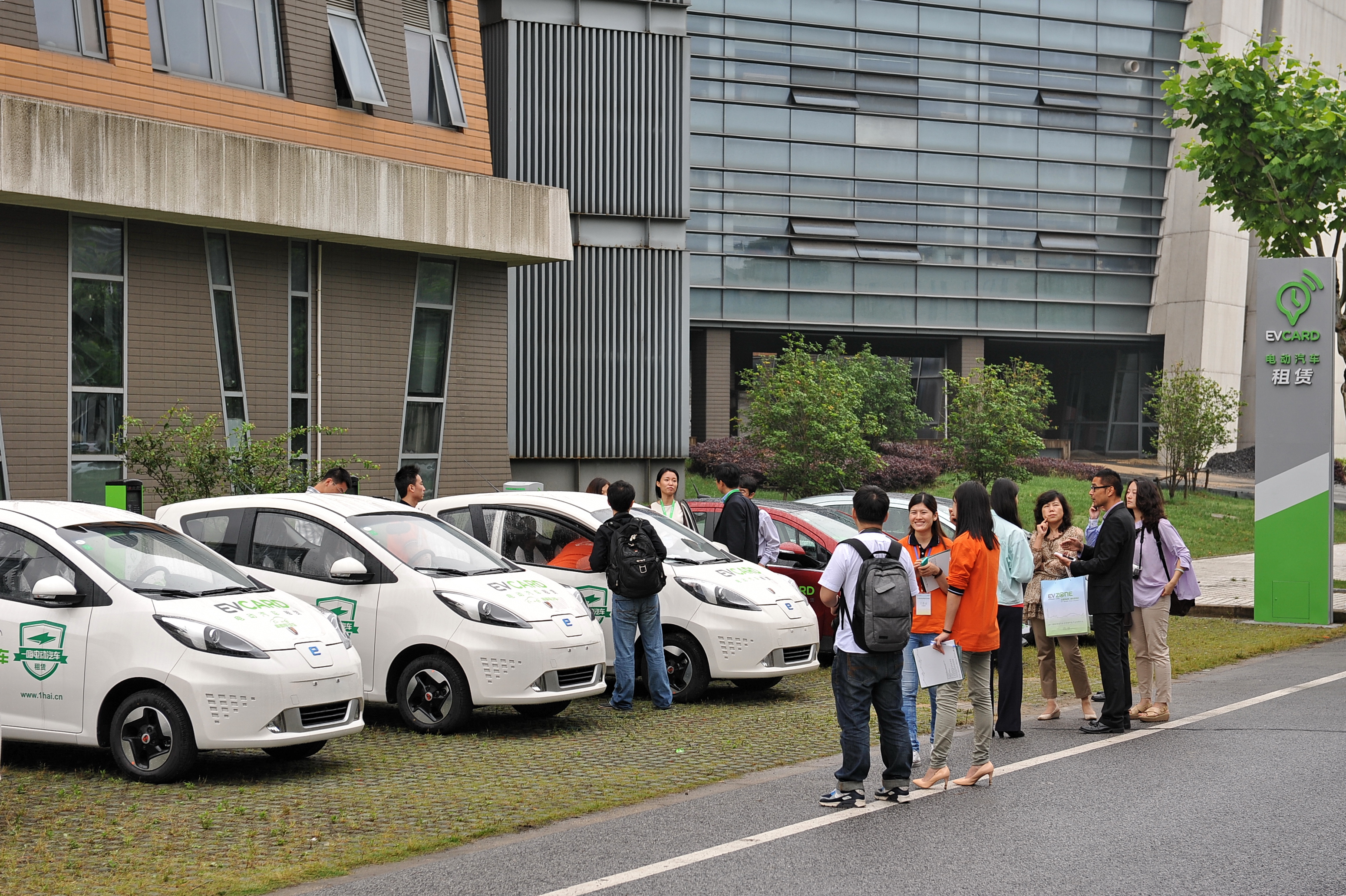
Jiaotong University students at an EV car sharing site.
The EV Zone has one battery-swapping station, run by the State Grid,http://www.cse.anl.gov/us-china-workshop-2012/pdfs/session3b_demos_standards/hua_3B-4-HUA-Tsinghua%20Univ-Progress%20in%20Battery%20Swapping%20Technolo.pdf and one gas station that also offers charging, run by Sinopec. It also has one station that supports bi-directional charging, allowing EVs to send energy back to the grid. Domestic automakers Lifan www.lifan.com and Zhongtai www.zotye.com contributed EVs that offer bi-directional charging, said Cao.
Different business models for selling EVs are also studied, and the area has an EV-only dealership, all in the pursuit of finding the best way to have a viable EV market, says Cao. Like the central government, Shanghai International Auto City has discovered that its initial targets for EV usage may have been a bit high. The demo base will have a 10,000 EV capacity by 2015. But it is likely only about 2,000 will actually be on the road then, says Cao. He is sanguine about the possibility of miscalculations, however.
“As a pilot city, it is an experiment,” he says. “We have different ways to get to the target. Even if it is the wrong way, this is good. If we explore some good ideas, we can promote this business model to China and the world!”
Follow up: My visit to Shanghai EDrive in China.
I visited Shanghai EDrive on October 24 as part of the Clean Truck and Bus Forum www.http://www.calstart.org/Projects/US-China-Clean-Truck-Forum/US-China-Clean-Truck-Summit-Agenda.aspx , sponsored in part by CalStart. The visit confirmed what I had heard about EDrive www.chinaedrive.com from industry sources; it is a well-run company. The visit also confirmed my and many others’ suspicions that the growth of the electric vehicle sector in China will fall far short of the government’s goals, at least for the next few years. The most recent New Energy Vehicle policy, which incentivizes commercial vehicles more generously than non-commercial vehicles will also result in a lopsided growth pattern. But that is not necessarily a bad thing.
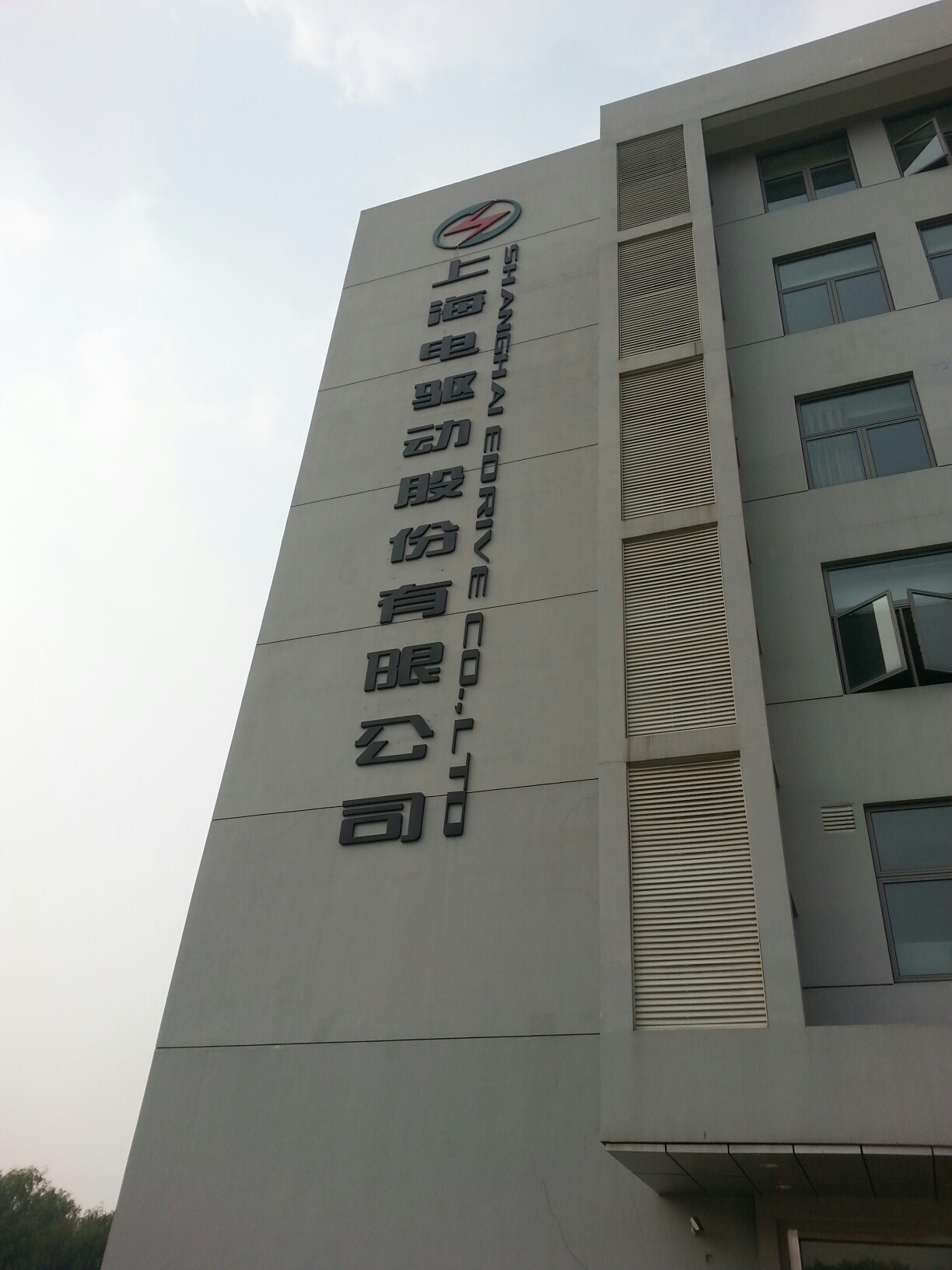 The building, on the outskirts of Shanghai, looks like all the other white-grey multi-story buildings in the industrial zone. Inside are clean rooms for manufacturing electronic controls and less-spotless but still clean rooms for the permanent magnet motors themselves.
We were greeted and given an introduction and tour by Dr. Zhang Zhouyun, vice general manager and senior engineer. EDrive has been growing like gangbusters since its establishment in 2008, with staff increasing 30-50% annually, he said. It has devoted 20% of its budget to R&D each year and holds 10 patents in China as well as many overseas patents. In 2013 EDrive aims for 400 million RMB in sales.
Interestingly, it seems EDrive sees the market for mini BEVs taking off much more quickly than that for larger vehicles. Not low-speed BEVs, but those able to achieve higher speeds than the 25 mph or so LSEVs are typically capable of. Some 180,000 units will be produced in China in 2014, EDrive figures. The company aims to supply 28% of that market, or 50,000 units.
Shandong is currently conducting a test project with such mini electric vehicles, says Dr. Zhang. Shandong already dominates China’s low-speed electric vehicle production; it seems Shandong figures that expertise can be leveraged into higher speed models.
Chery www.cheryinternational.com and Geely www.geelyauto.com.hk are two companies that are planning volume production of the mini-BEVs, says Dr. Zhang. Some domestic manufacturers are testing in-wheel motors on the mini EVs, he says.
As for passenger car PHEVs, five or six companies plan to produce them starting in 2015 and EDrive has contracts with some, including FAW www.faw.com and Chery. But the EDrive folks seemed to think the production levels would be very low. They will mainly be test vehicles.
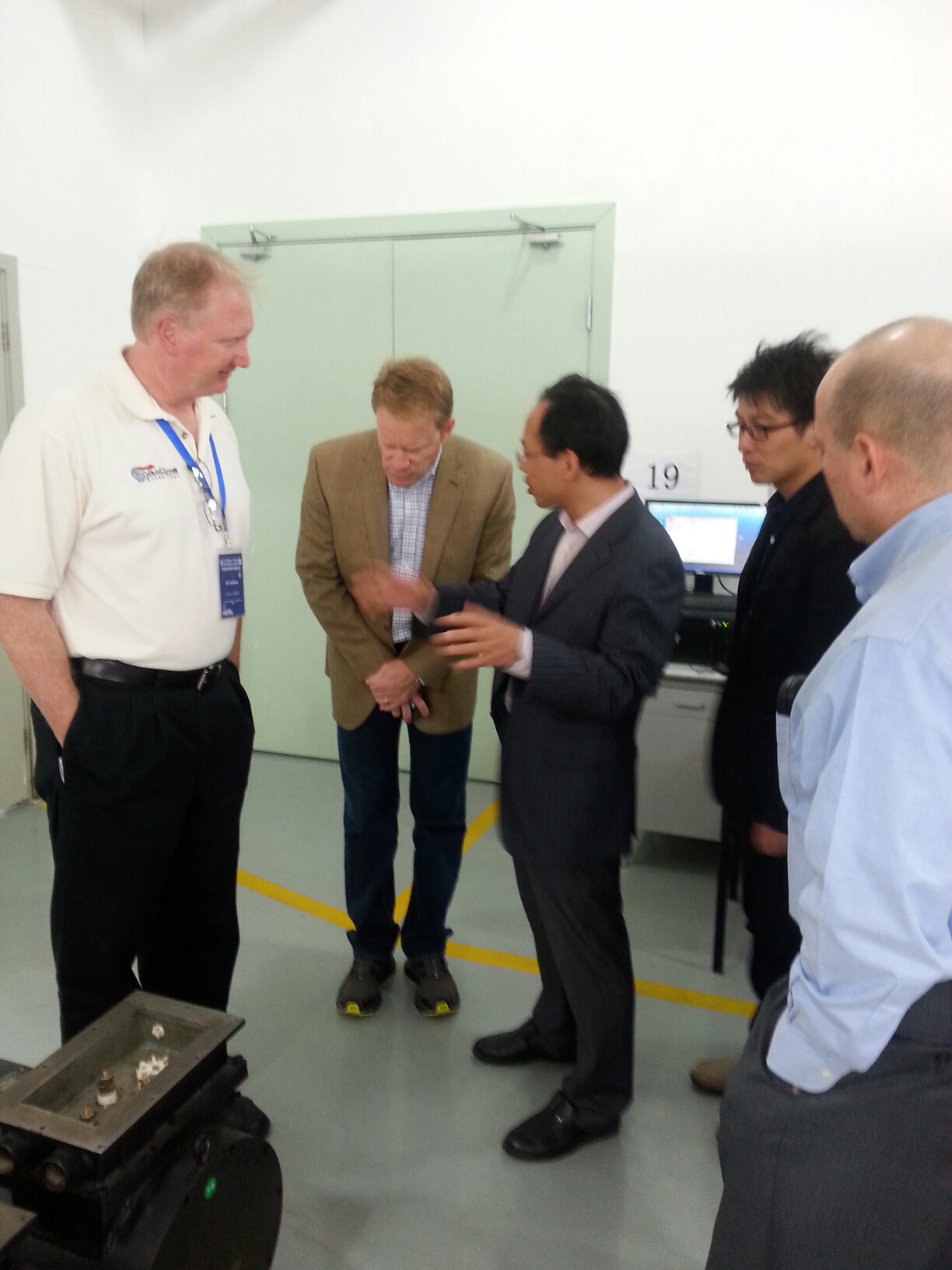
Dr. Zhang explains EDrive’s technology to visitors from CalStart’s Clean Truck and Bus Forum in Shanghai in October, 2013.
The big growth in NEVs over the next few years, as EDrive CEO Dr. Gong mentioned in our interview, is commercial vehicles, the EDrive guys confirmed.
So, an interesting visit to a company that should do well if the Central government sticks to its guns and enforces the latest NEV plan. http://www.bloomberg.com/news/2013-09-17/china-renews-electric-vehicle-subsidies-without-adding-hybrids.html But even at EDrive, an admission that all those announcements about NEV passenger cars are mainly for show and that volumes will be quite small for at least the next few years. Still, as I mentioned up top, the new policy’s focus on commercial vehicles/ fleets is a good thing. Applications are more apparent and with volume production some breakthroughs, or at least cost reduction on some components, should be possible.
While the Chinese government may be intent on growing the electric vehicle segment, Chinese consumers are not so keen to buy electric vehicles. But that doesn’t mean companies in China that produce components for electric vehicles aren’t counting on the sector growing. The just-released New Energy Vehicle policy is a big reason for that optimism. Local government support also plays a role.
The history of one of those companies, Shanghai EDrive, http://www.chinaedrive.com/index2.asp is a micro-history of China’s quest to be a global player in the electric vehicle field, and proof that the Chinese government is taking a long-term view in developing the sector. If EDrive succeeds, it will mean China is succeeding in its electric vehicle ambitions as well.
Shanghai EDrive produces electric motors, controllers, and invertors for both traditional gasoline-powered vehicles and electric vehicles. It has long benefited from government support for the electric vehicle segment. I recently spoke with Dr. Gong Jun, president of EDrive, by phone and also exchanged emails with Jimmy Lin Renjie, who works with Gong, about the recent policy and EDrive’s future.
“Of course the new policy is good for our company,” Gong told me.
Now, I’m a skeptical person. And I am certainly no engineer so can’t evaluate EDrive’s technology. But several industry friends have spoken well of EDrive. Its growth strategy is, however, based on the belief that electric vehicles, first regular hybrids, then plug-in electric hybrids, then battery electric vehicles, will take a growing share of the vehicle market. And of the government supporting companies that serve that purpose.
EDrive’s support from the government started with the 863 program. http://www.most.gov.cn/eng/programmes1/200610/t20061009_36225.htm The 863 program was launched by the central government in 1986 and has been part of every Five-Year Plan since. Its goal is to help China “leapfrog” in certain technologies to become a world leader. EDrive has also received funding from the Shanghai government.
The components it produces are used in both traditional internal combustion engine vehicles and electric vehicles, from hybrids to low-speed electric vehicles to regular battery electric vehicles. EDrive is already profitable. Its motors are in hybrids cars produced by companies ranging from Dongfeng www.dfm.com.cn and FAW www.faw.com.cn to Brilliance www.brillianceauto.com , Geely www.geelyauto.com.hk , and Chery www.cheryinternartional.com ; and in hybrid buses from just about every large Chinese bus maker you can name, according to materials EDrive sent me. Ditto with the few pure electric vehicles being produced (but not BYD, which is highly vertically integrated) and many micro cars such as the QQ, it seems.
Eventually, when his company is big enough, Gong figures it will want to export. One way it aims to grow is by listing on Shenzhen’s Growth Enterprise Market next year. EDrive is preparing the materials right now.
EDrive has been in business since June of 2008. It manufacturers to a client’s specifications and also does what Lin called “cutting edge” research and development of components in cooperation with universities. It is receiving a growing number of orders related to components for battery electric and plug-in hybrid electric vehicles, mainly buses right now, says Gong. “Due to the new policy, we expect that will grow,” he says.
Gong is right, the recently released NEV policy should be good for EDrive. If the central government is effective in implementing the policy, that is. Gong mentions in particular the mandate for 30% of new vehicles in municipal fleets to be New Energy Vehicles, which in practice will mean BEVs and PHEVs. For details see my earlier blog on the policy.
What about the consumer market for electric vehicles? That is more uncertain because of the lack of a charging infrastructure, Lin told me. “The bottleneck for the development of passenger cars is the infrastructure such as the charging point,” he says. “If the infrastructure is developed, the EV of passenger car will have a bright future.”
And it seems EDrive will be along for the ride.
.
China could learns from PG&E’s electric vehicle program
In July of 2012, I wrote about the just-released policy in China to promote new energy vehicles and fuel-efficient vehicles. At the time, I mourned the lack of incentives for producing new energy fleet vehicles and suggested the government would have better served its cause with a policy that did that. In the same blog, I talked about what Pacific Gas & Electric www.pgande.com , a huge utility in Northern California, was doing to further alternative fuel vehicle research here in the U.S.
Well, a bit more than a year later the Chinese government has come out with a new policy to promote new energy vehicles and it focuses mainly on fleet vehicles, especially buses! http://www.miit.gov.cn/n11293472/n11293832/n11293907/n11368223/15629319.html Glad Beijing got the word. This blogging platform (i.e. WordPress) is blocked in China but those government officials and fagawei types probably have VPNs.
I wrote about the new policy in my recent ChinaEV blog, so in the interest of symmetry I’m going to talk about what PG&E is up to now re: alternative fuel vehicles. Rather than reiterate everything I said last July, let’s just look at an event that just occurred, the unveiling of what PG&E says is the utility industry’s first plug-in electric hybrid Class 5 work trucks.

PG&E aims to convert all its Class 5 trucks to PHEVs
Those trucks were produced by Electric Vehicles International, www.evi-usa.com or EVI, a manufacturer located in Stockton, CA. The transplant – it was based in Mexico – is a good example of how government support can help expand the commercial electric vehicle industry. PG&E’s participation shows how the private sector can both take advantage of and propel development of EV technology.
EVI is a 20-year old company that moved to the California central valley city of Stockton from Mexico after current EVI president Ricky Hanna bought the company. He switched EVI’s focus from light-duty EVs to heavy-duty EVs and moved operations to California about five years ago because of the state’s generous subsidies for electric vehicle makers. Smart move – EVI has received $7 million in grants from the California Energy Commission. It produces both range-extended electric vehicles (a type of PHEV) and battery-electric vehicles.
Just so you don’t have to re-read the previous blog (though of course you should), here is a bit of background on PG&E’s alt-fuel vehicle quest taken straight from that blog: As one of the largest public utilities in the U.S., PG&E has a huge fleet—some 14,000 vehicles. That’s a pretty big Petri dish for testing out new alternative fuel technologies, and PG&E has been doing that for years, says Dave Meisel, director of transportation for PG&E.
The utility has gotten much more active in testing alternative fuel technology vehicles in the last four or five years, he says, which makes sense because finding replacements for gasoline as a vehicle fuel has become a much hotter topic in the last four or five years. PG&E isn’t doing this out of the goodness of its heart. Partly, it is compelled by California law to have a certain percentage of low-emission vehicles in its fleet. But PG&E is also looking to save money.
Now, back to the present: PG&E started working with EVI about four years ago, says Meisel. It wants to try out EVI’s Class 5 vehicles – that’s like a Ford F450 or F550 truck. PG&E works with other companies in the EV space including VIA www.viamotors.com , Efficient Drivetrains Inc www.efficientdrivetrains.com ., and Altec www.altec.com . All are located in California.
“We prefer to spend our money locally,” says Meisel. (That’s nice since I pay taxes here and I prefer they stay in the state as well….). “In 2013 we are going to buy $221 million worth of new vehicles, all purchased from somebody in California.”
PG&E has purchased four EVI REEV trucks. PG&E estimates each truck will save PG&E over 850 gallons of fuel per year. So the utility’s alt-fuel vehicle quest isn’t just to meet state government requirements, it also makes business sense. Indeed, PG&E hopes to replace all of its Class 5 vehicles with REEVs, says Meisel.
“I think clearly that if we can validate the technology and we believe we can, if it delivers the results we believe it will deliver, we will be moving that tech into our fleet on large scale,” he says. “It is too early to say who will supply the vehicles.”
As I wrote about before, what PG&E really likes in its trucks is exportable power, and it works with its EV manufacturers to up their exportable power capability. Though the EVI trucks can export up to 100 kilowatts, the “holy grail” is really 125 kilowatts. “If we can get a vehicle up to that it opens up a lot of possibilities for us,” says Meisel.
PG&E can use the fleet to provide power to a neighborhood when it does repairs instead of having planned outages. Also, in emergency response situations the fleet could provide power.
“I handled the response to hurricane Sandy,” he says. “We found that we were trying to move in larger generators. When we tried to move them in from all over the U.S., we couldn’t put a dent in the amount requested vs. what was available. If we had sent 400 hybrids, that is like moving a small power plant into New York.” China take note….
China’s latest new energy vehicle policy may result in fresh EV tech for the world
The Chinese government just issued its latest New Energy Vehicle subsidy policy. http://jjs.mof.gov.cn/zhengwuxinxi/tongzhigonggao/201309/t20130916_989833.html Seems like the government has pretty much given up on trying to create a consumer market for new energy vehicles, which include battery electric, plug-in hybrid electric, and hydrogen fuel cell vehicles. That isn’t so bad, actually. Because the government’s focus has turned to the area where NEVs have real potential — public transportation and fleet vehicles. http://www.bloomberg.com/news/2013-09-17/china-renews-electric-vehicle-subsidies-without-adding-hybrids.html
One technology has been completely left out of the current policy – regular hybrid vehicles. My friend Yang Jian mourns this omission in a column for Automotive News China. http://www.autonewschina.com/en/article.asp?id=10788 But I don’t think it is so bad. The price of hybrids will soon come close to that of regular gasoline-powered cars. And if the hybrids can offer significant fuel economy then Chinese will buy them, just as Americans have.
Some details of the new NEV policy:
The policy covers 2013-2015.
The subsidies for NEV passenger vehicles are no larger, and decline over the next two years. Battery electric passenger cars are eligible for incentives of up to 60,000 RMB, plug-in hybrid electric passenger vehicles up to 35,000 RMB in 2013. Those amounts will decrease by 10% in 2014 and by 20% in 2015.
Hydrogen fuel cell passenger cars are eligible for incentives of 200,000 RMB. That amount will also decrease in 2014 and 2015.
Battery electric public transportation buses are eligible for up to 500,000 RMB in incentives. Plug-in hybrid electric vehicle bus incentives top off at 250,000 RMB.
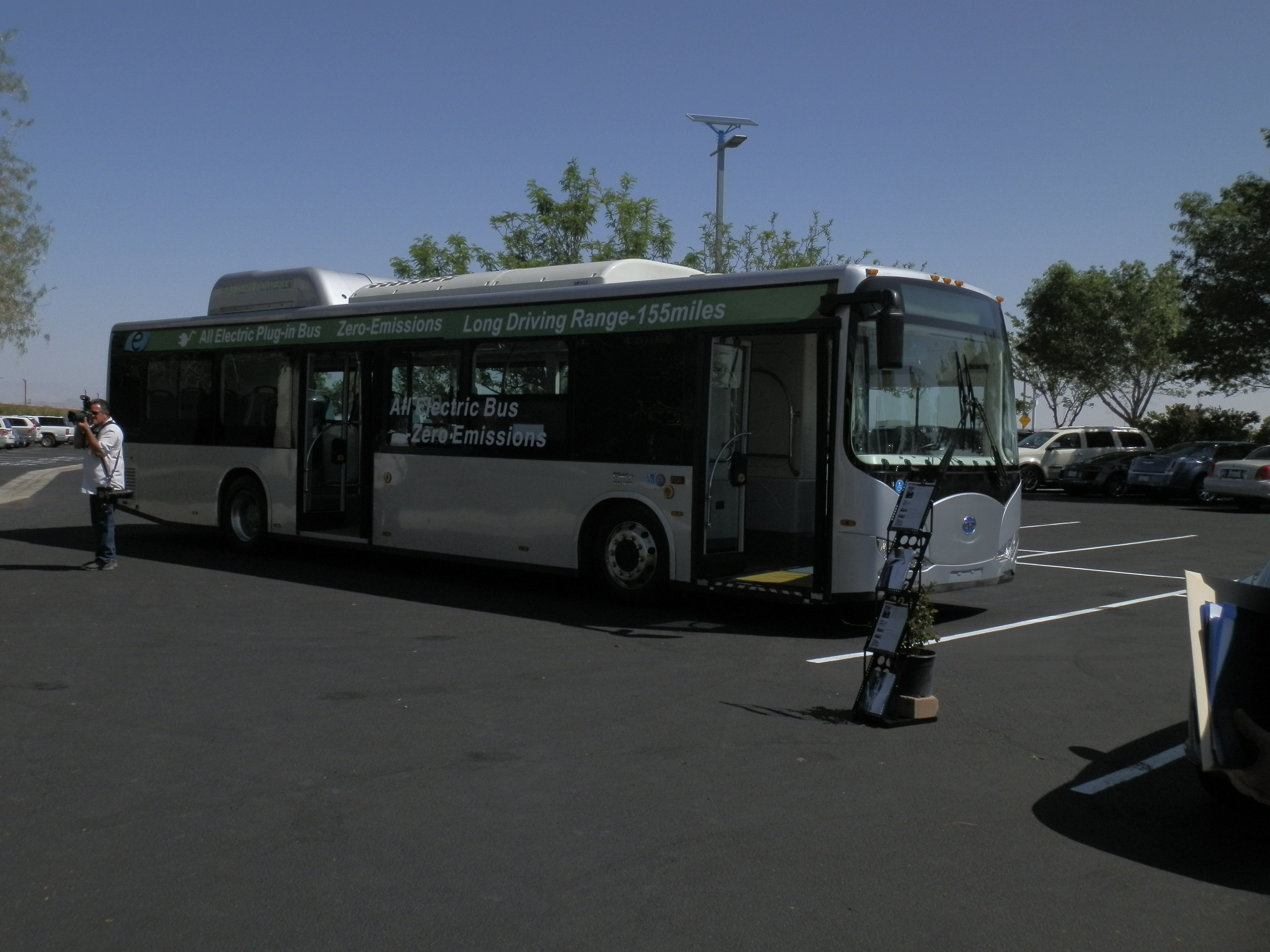
BYD’s ebuses should do well under the new policy.
Commercial vehicles in public fleets are another important inclusion. Mail, sanitation, garbage, and general goods battery electric vehicles receive a 150,000 RMB incentive.
There are target purchase volumes and guidelines for municipal governments:
In large cities and areas – mainly Shanghai, Beijing, and Guangzhou it seems – the number of NEVs should reach no fewer than 10,000 by 2015. All other cities and/or areas should have no fewer than 5,000.
When buying new vehicles for municipal fleets, at least 30% of the purchases should be NEVs.
In an important nod to the huge problem protectionism presents in growing the public transportation and fleet market for NEVs, the policy also says at least 30% of the purchases should be from companies outside of the region.
Those are the main points. While it remains to be seen how rigorously the policy will be enforced, the subsidies may kick-start production of NEVs by the regional and national vehicle manufacturers. Of course, they don’t have all the necessary technology to product BEVs and PHEVs. That could present a business opportunity for foreign firms with battery management system technology, for example. And for companies that can integrate the electric drivetrains into the rest of the systems, which has been a problem for Chinese companies.
Sure, it also shows that China’s central government hasn’t given up on becoming a leader in some kind of electrification technology. Otherwise, why totally exclude regular hybrids from the policy? As Yang Jian points out, China still hasn’t given up on trying to be a leader in some electrification area and hybrids are already mature technology.
But Chinese automakers will need plenty of help from outside China to produce quality BEVs and PHEVs, so they are unlikely to become leaders in those areas anytime soon. The volumes envisioned for local fleets could, however, result in new technologies being developed for China, technologies that the rest of the world could benefit from. At the very least, volume production of some components should help bring the price down.
So, the new policy should benefit both China and the rest of the world. Now to wait for the level of enforcement….
 Alysha Webb
